
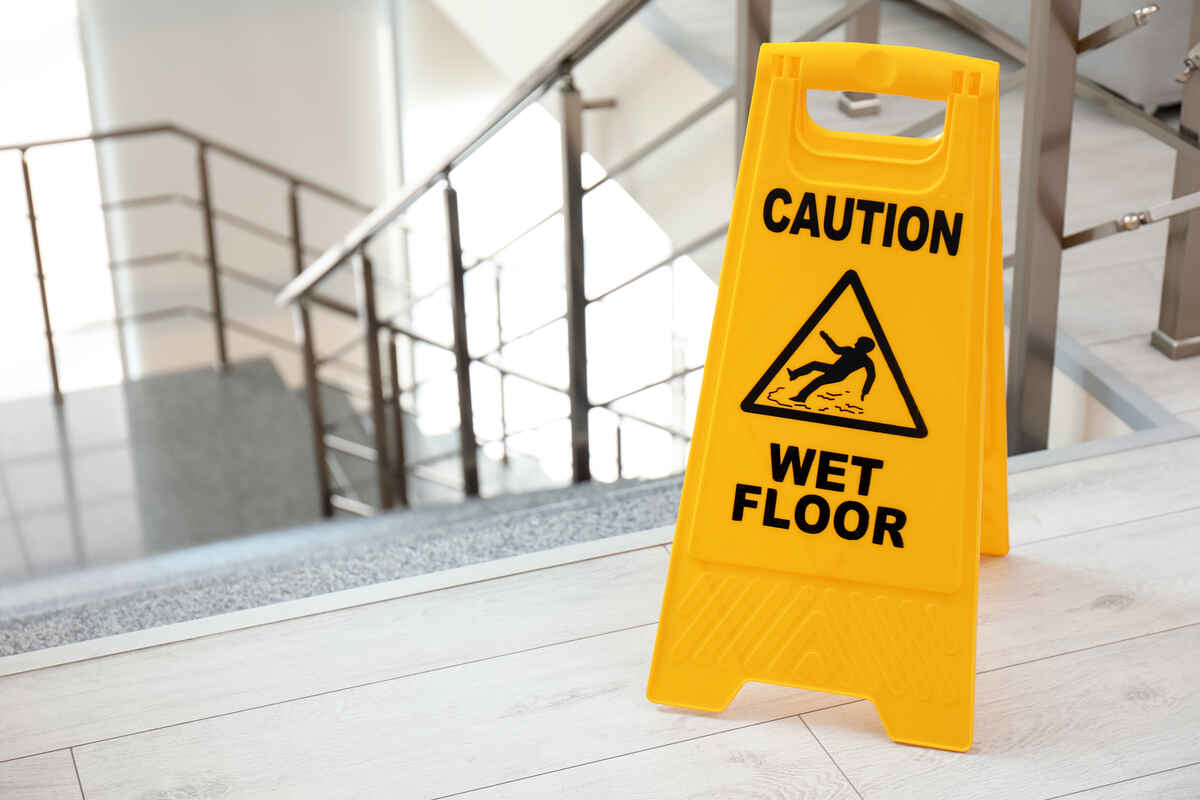
Why a Wet Floor Sign Is a Warning, Not a Solution
Does a “Slippery When Wet” Sign Actually Protect You? The answer is yes, but only to a point.
A "Slippery When Wet" sign serves an important purpose. It warns people that conditions may be hazardous and encourages them to use caution. In many situations, placing a warning sign is the right thing to do.
The problem is that a warning sign does not make a floor safer. It does not improve traction, increase slip resistance, or determine whether the surface performs safely when wet.
That distinction matters because many organizations treat wet floor signs as a complete safety solution rather than a temporary warning. If a floor consistently requires warning signs during rain, after cleaning, or whenever moisture is present, a larger question should be asked:
Why does the floor require the warning in the first place? A sign can alert people to a hazard. It cannot tell you whether the hazard has been evaluated, measured, or addressed. For that, you need something more than a warning. You need data.
What Is a "Slippery When Wet" Sign Designed to Do?
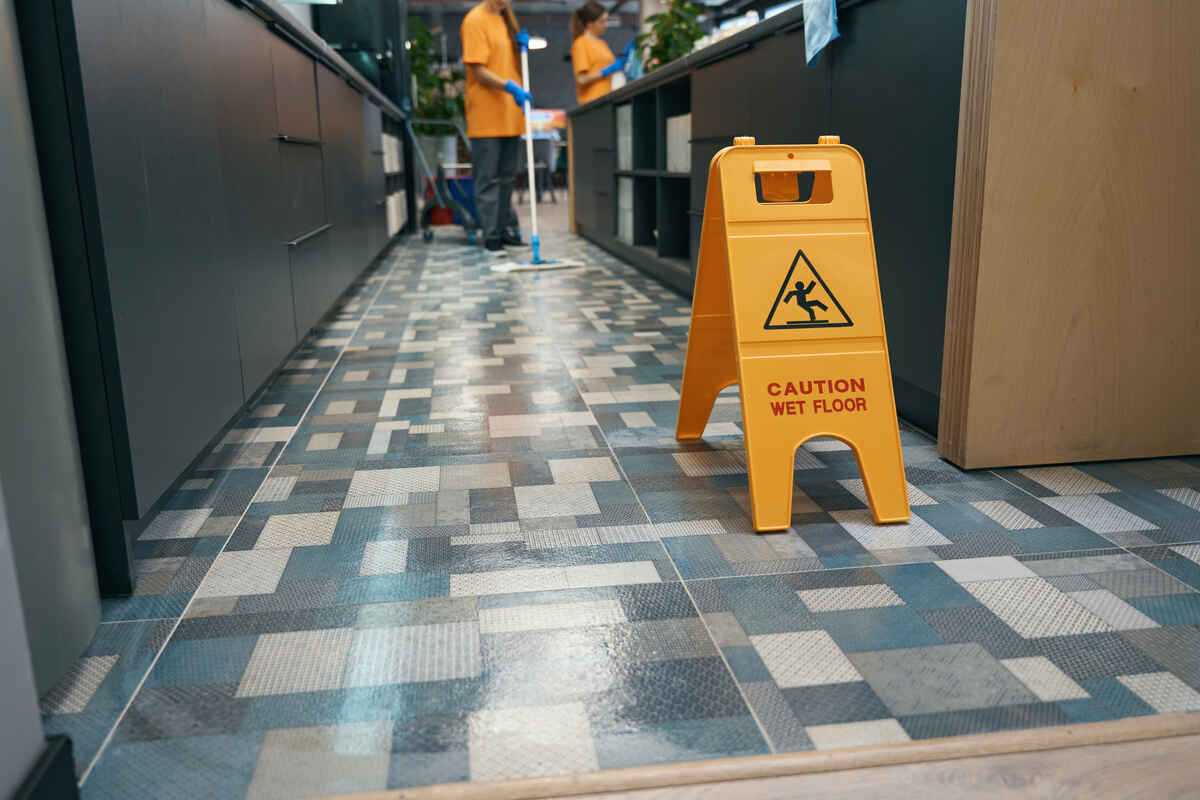
A "Slippery When Wet" sign has a simple job: warn people about a temporary condition that could increase the likelihood of a slip. The sign is not designed to make a floor safer. It does not increase traction. It does not improve slip resistance. It simply communicates that caution may be necessary because conditions have changed.
That distinction is often overlooked. In many facilities, wet floor signs become part of the daily routine. Custodial staff place them after mopping. Maintenance teams deploy them during rain events. Employees set them out when spills occur. Over time, the sign can become so familiar that it starts to feel like a complete safety strategy rather than a temporary warning. But a warning and a solution are not the same thing.
Imagine a stair tread that has become loose. Placing a sign near the stairs may alert people to the issue, but nobody would argue that the sign repaired the tread. The underlying condition still exists. The same principle applies to walking surfaces.
If a floor becomes slippery whenever it rains, whenever it is cleaned, or whenever moisture is tracked inside, the sign is a warning to people about a recurring condition. It is not addressing why that condition exists or whether the surface performs within accepted safety expectations.
This is where many facilities unknowingly create a blind spot in their risk management process. The presence of a warning sign can create the impression that the hazard has been addressed when, in reality, the hazard may never have been evaluated. The floor may perform perfectly well and simply require better moisture management. Or it may have inadequate wet-surface traction that has never been measured.
Without testing, there is no way to know. That is why organizations focused on long-term risk reduction view warning signs as one tool among many. Signs have value. They help communicate temporary conditions. But they are most effective when used alongside a broader strategy that includes evaluation, documentation, maintenance practices, and, when necessary, corrective action.
A wet floor sign answers one question: "Are people being warned?"
It does not answer a much more important one: "How does the floor actually perform when it gets wet?"
Why Businesses Depend on Wet Floor Signs
Most organizations do not rely on wet floor signs because they believe signs solve the problem. They rely on them because signs are familiar, inexpensive, and immediately available.
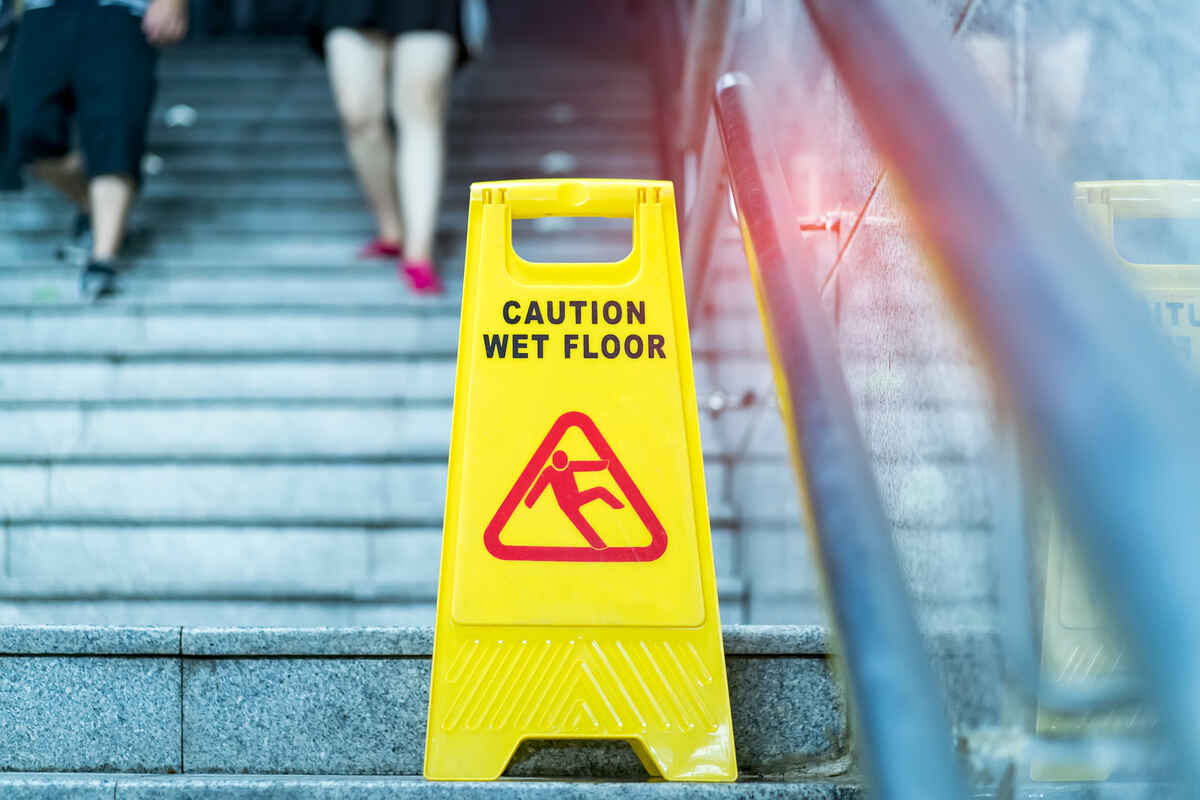
When rain is coming through an entrance, a spill occurs in a hallway, or freshly cleaned floors need time to dry, placing a warning sign feels like the responsible thing to do. In many situations, it is. The challenge begins when temporary warnings become permanent operating procedures.
Consider a facility that places wet floor signs at the same entrance every time it rains. After months or years, the sign is no longer responding to an unusual condition. It is responding to a predictable one. At that point, the sign may be revealing something important.
It may indicate that moisture control measures are insufficient. It may suggest that matting is not effectively capturing water. It may point to cleaning procedures that are affecting traction. Or it may raise questions about how the floor performs under wet conditions.
None of those questions can be answered by the sign itself. This is where operational reality and risk management intersect. The goal is not simply to warn people when conditions become hazardous. The goal is to understand why those conditions continue to occur and whether they can be reduced, controlled, or documented more effectively.
Many organizations also rely on signs because they have never experienced a serious incident. The absence of previous falls can create a false sense of certainty. Unfortunately, floor performance does not improve simply because no one has been injured yet.
A surface may operate without incident for years before a change in weather, cleaning chemistry, footwear, foot traffic, or environmental conditions exposes a weakness that was always present. When that happens, the question often shifts from "Why did this happen?" to "What did we know about the risk beforehand?"
That is why experienced facilities professionals increasingly look beyond visible warnings and focus on measurable information. A sign can tell people to be careful. Testing can tell you whether the floor is actually performing as expected. Those are two very different forms of protection.
The Liability Question Most Facility Managers Never Ask
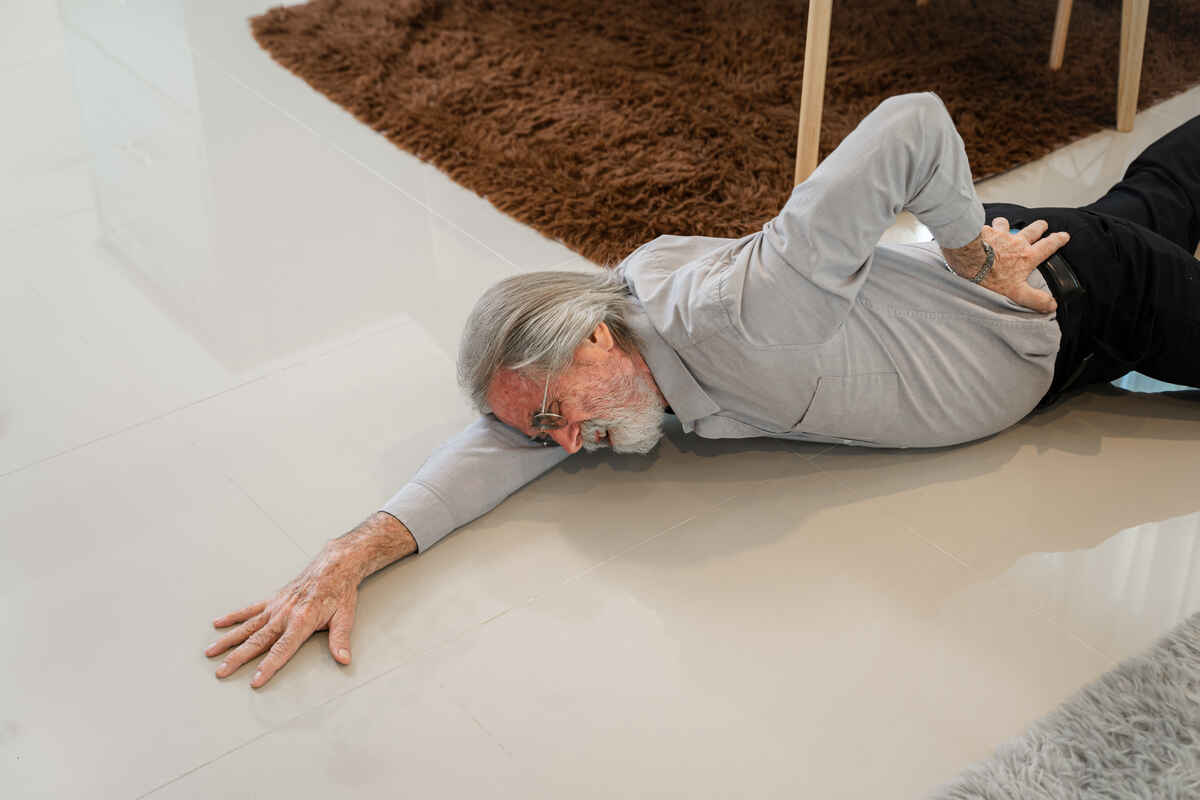
Most discussions about slip-and-fall liability focus on what happened after an incident. Was there a warning sign? Was the area cleaned? Did someone report the hazard? Were procedures followed?
Those questions matter. But there is another question that often receives far less attention: How did the organization determine the floor was safe before the incident occurred?
That question can be uncomfortable because it exposes a common assumption. Many walking surfaces are considered safe because they look safe. They are clean, intact, and have not generated complaints. As a result, performance is often assumed rather than verified.
The problem is that appearance and performance are not the same thing. A floor can look perfectly acceptable while still providing inadequate traction when moisture is present. The only way to know how a surface performs under real-world conditions is to evaluate it.
This becomes especially important when a recurring hazard has already been identified. If wet floor accidents are a recurring concern, or if employees regularly deploy warning signs after cleaning, those patterns suggest that the floor's performance deserves a closer look. From a risk management perspective, the issue is not whether someone knew the floor could become slippery. The issue is what was done with that knowledge.
Did the organization investigate the cause?
Was the surface evaluated?
Were traction levels measured?
Was there documentation showing the condition had been assessed?
Or did the facility simply continue placing warning signs while assuming the underlying issue was being managed?
This is where many organizations unknowingly create exposure. A recurring condition that has never been evaluated remains an unknown. And unknowns become difficult to defend when questions are asked after an incident.
By contrast, a documented evaluation creates a baseline. It demonstrates that the organization took steps to understand how the surface performed, reviewed the findings, and made decisions based on measured information rather than assumptions.
That does not automatically eliminate risk. No facility can eliminate every possible incident. What it does provide is evidence that the organization acted responsibly, investigated known concerns, and approached walkway safety as a measurable operational issue rather than a matter of guesswork.
That distinction is the difference between reacting to an event and being able to show that the risk was assessed before the event ever occurred.
When a Warning Sign Becomes Evidence
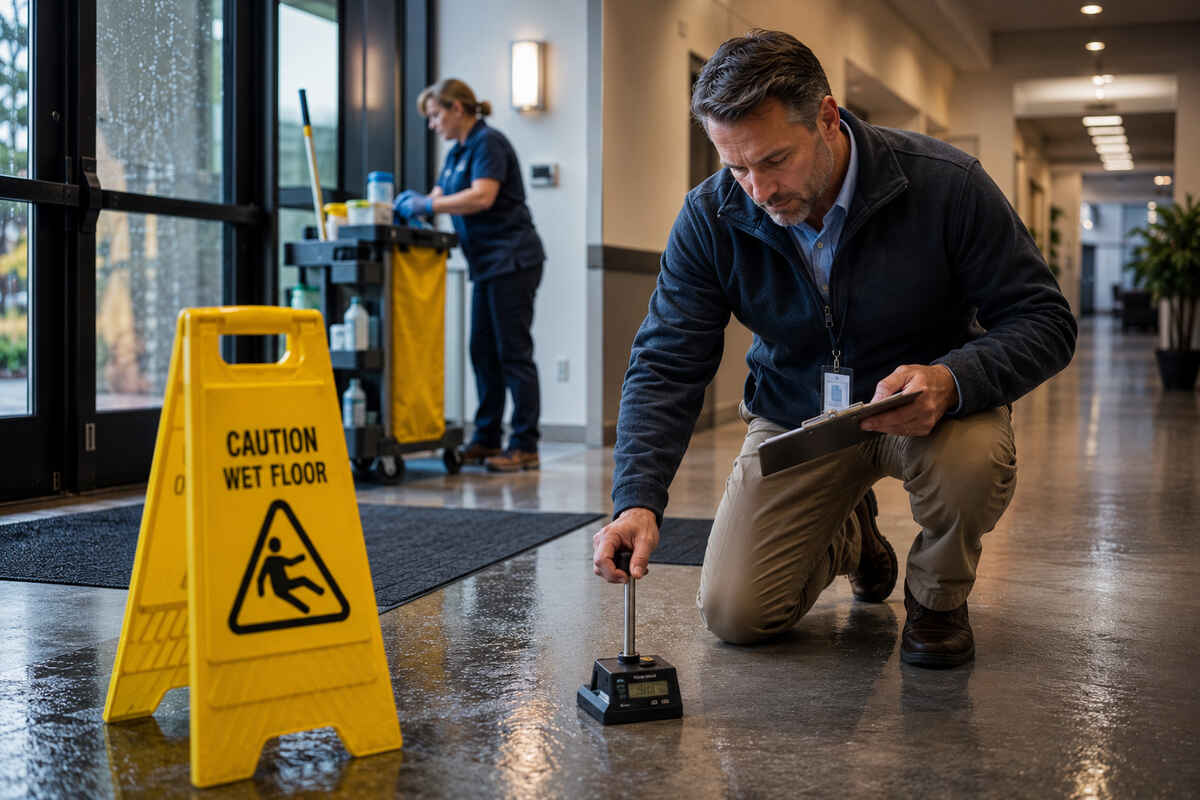
A wet floor sign is intended to communicate awareness of a temporary hazard. The challenge is that awareness can carry implications of its own.
In a slip-and-fall claim, one of the first questions often examined is whether the property owner knew, or should have known, about the condition that contributed to the incident. Legal professionals refer to this as actual or constructive notice.
In simple terms, the question becomes: Did the organization know there was a problem? This is where the recurring use of warning signs can attract attention.
If a facility places a "Slippery When Wet" sign in the same location every time it rains, every time the floor is cleaned, or every time moisture is present, the sign may suggest that the condition is not unexpected. It may indicate that the organization has long been aware that the area becomes hazardous under foreseeable circumstances.
By itself, that is not necessarily a problem. The more important question is what happened next. Once a recurring condition has been identified, was the floor evaluated? Were traction levels measured? Was the cause investigated? Were maintenance practices reviewed? Was there documentation showing the organization took reasonable steps to understand and address the issue?
If those questions cannot be answered, the warning sign may tell only part of the story. A plaintiff's attorney will not focus solely on the fact that a sign was present. They may focus on what the sign implies. If the organization knew the floor repeatedly became slippery under normal operating conditions, why was the condition never evaluated? Why was the underlying cause never investigated? Why did the same warning continue appearing year after year?
That shifts the discussion away from the warning itself and toward the organization's response to a known condition. This is an important distinction for Facilities Directors. The objective is not to stop using warning signs. There are many situations where signs are appropriate and necessary. The objective is to avoid treating signs as proof that the issue has been resolved.
A warning sign demonstrates awareness. Documentation demonstrates due diligence. Those are not the same thing.
When a facility can show that a surface was tested, evaluated against recognized standards, and reviewed as part of a documented risk management process, the conversation changes. The organization is no longer relying solely on warnings. It can demonstrate that it took steps to understand how the floor performed and make informed decisions based on measurable information.
That creates a much stronger position than simply being able to show that a yellow sign was placed near the hazard. Because, in the end, the question is rarely whether people were warned. The question is whether the organization did enough after recognizing that the condition existed.
The Difference Between Hazard Management and Hazard Reduction
Many organizations believe they are reducing risk when they are actually managing it. The difference may sound subtle, but it has significant implications for safety, operations, and liability.
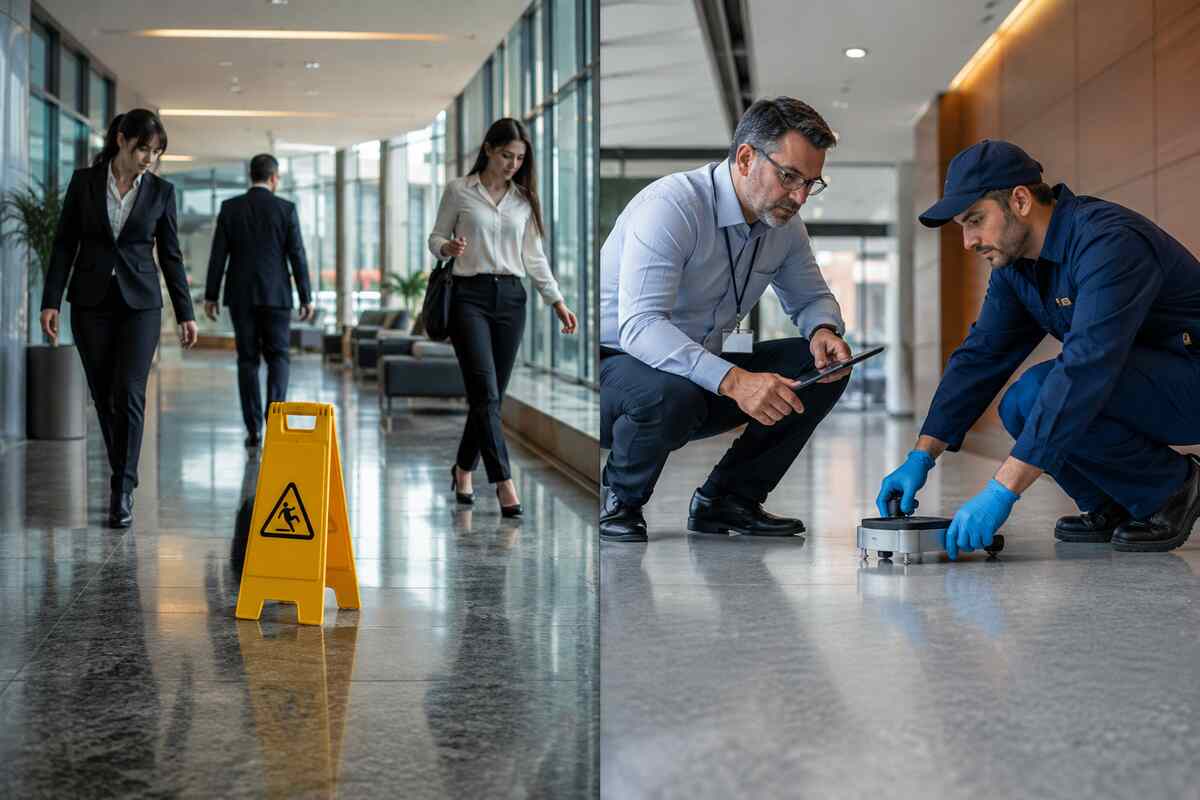
Hazard management focuses on responding to a known condition. Hazard reduction focuses on understanding why that condition exists and reducing the likelihood that it will occur in the first place.
A wet floor sign is a form of hazard management. The sign alerts people to use caution. It acknowledges that a condition exists and encourages individuals to adjust their behavior accordingly.
There is nothing inherently wrong with that approach. In many situations, warning people is appropriate and necessary. The limitation is that the hazard itself remains unchanged.
The floor has not become more slip-resistant. Traction has not improved. The underlying cause has not been investigated. The condition is simply being managed while it exists. Hazard reduction takes a different approach.
Instead of asking, "How do we warn people about this?" the question becomes, "Why is this happening, and can we reduce the likelihood of it happening again?" That shift often uncovers issues that have little to do with the floor itself.
For example, repeated slip concerns may be connected to:
Improper cleaning chemistry
Incorrect dilution ratios
Residue left behind during maintenance
Inadequate entrance matting
Poor moisture control
Environmental conditions that were never evaluated
Flooring that has never been tested under wet conditions
In some cases, correcting these factors resolves the issue without altering the walking surface at all. In other cases, testing may reveal that the floor does not provide adequate traction when wet and that some form of intervention is necessary.
The important point is that decisions are based on evidence rather than assumptions. This distinction matters because recurring hazards often become normalized over time.
Employees get used to placing signs in the same location. Managers expect complaints during rainy weather. Custodial staff learn which areas require extra attention.
Eventually, everyone accepts the condition as part of normal operations. But a condition that has become routine is not necessarily a condition that has been addressed.
Experienced Facilities Directors understand this difference. Their goal is not simply to react when a problem appears. Their goal is to understand the system that creates the problem and determine whether it can be measured, documented, and improved.
Warning signs may still have a place in that process. The difference is that they become one layer of protection rather than the entire strategy. That is where organizations move from managing exposure to actively reducing it.
What Happens When Floors Have Never Been Tested
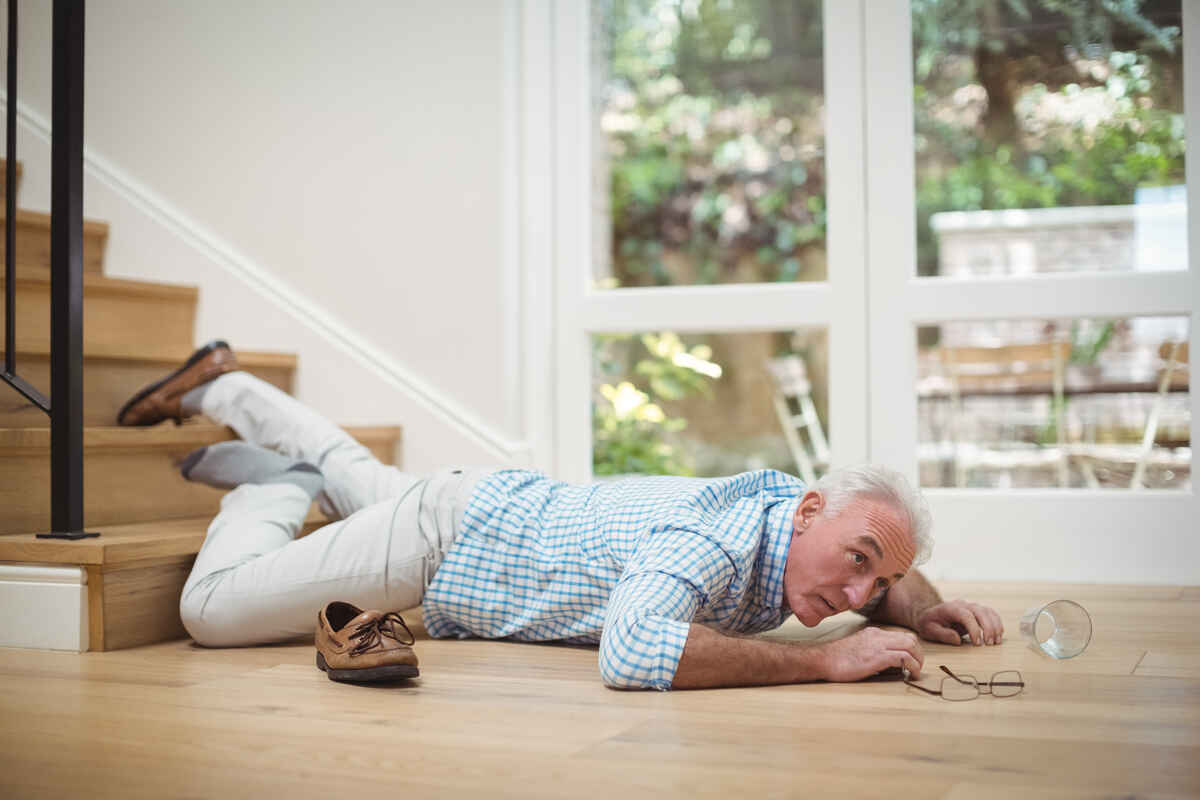
Most floors are never tested. They are installed, cleaned, maintained, and walked on every day without anyone ever measuring how they perform under actual operating conditions.
That may sound surprising, especially considering how much attention organizations devote to safety. But in many facilities, floor performance is assumed rather than verified.
The reasoning is understandable. The floor looks fine. There have been no complaints. No one has reported an injury. Operations continue as usual. As a result, many organizations conclude that the floor must be safe. The problem is that none of those observations tell you how the surface performs when conditions change.
A floor that appears safe on a dry afternoon may behave very differently when rain is tracked inside, when cleaning residues accumulate, or when moisture remains on the surface longer than expected. These changes are often gradual and difficult to detect through visual inspection alone.
That creates a dangerous gap between perception and performance. This is where uncertainty becomes exposure. If someone asks, "How do we know this floor is performing safely?" the answer cannot be based on appearance. It cannot be based on assumptions. It cannot be based on the fact that no one has fallen yet.
The only reliable answer comes from measurement. This is the same approach used throughout facility operations. Air quality is measured. Water quality is measured. Electrical systems are tested. Fire protection systems are inspected.
Critical decisions are made using objective information rather than visual observation alone. Walkway safety should be no different. Without testing, organizations are left guessing about several important questions:
Does the floor provide adequate traction when wet?
Has cleaning changed surface performance over time?
Are certain areas performing differently from others?
Does the surface meet recognized safety thresholds?
Is there documentation showing the floor was evaluated?
Without measured answers, each of those questions remains an unknown. That uncertainty often remains hidden until an incident occurs. Then, suddenly, everyone wants data that was never collected. They want to know whether the floor was safe. They want to know whether there were warning signs. They want to know whether the condition could have been identified earlier.
Unfortunately, those questions are much easier to answer before an incident than after one. This is why testing is such an important part of proactive walkway safety. The goal is not to prove that every floor is unsafe. In many cases, testing confirms that a surface is performing exactly as it should.
How DCOF Testing Establishes a Baseline
If a floor has never been tested, the next logical question is straightforward:
How do you actually measure whether a walking surface provides adequate traction?
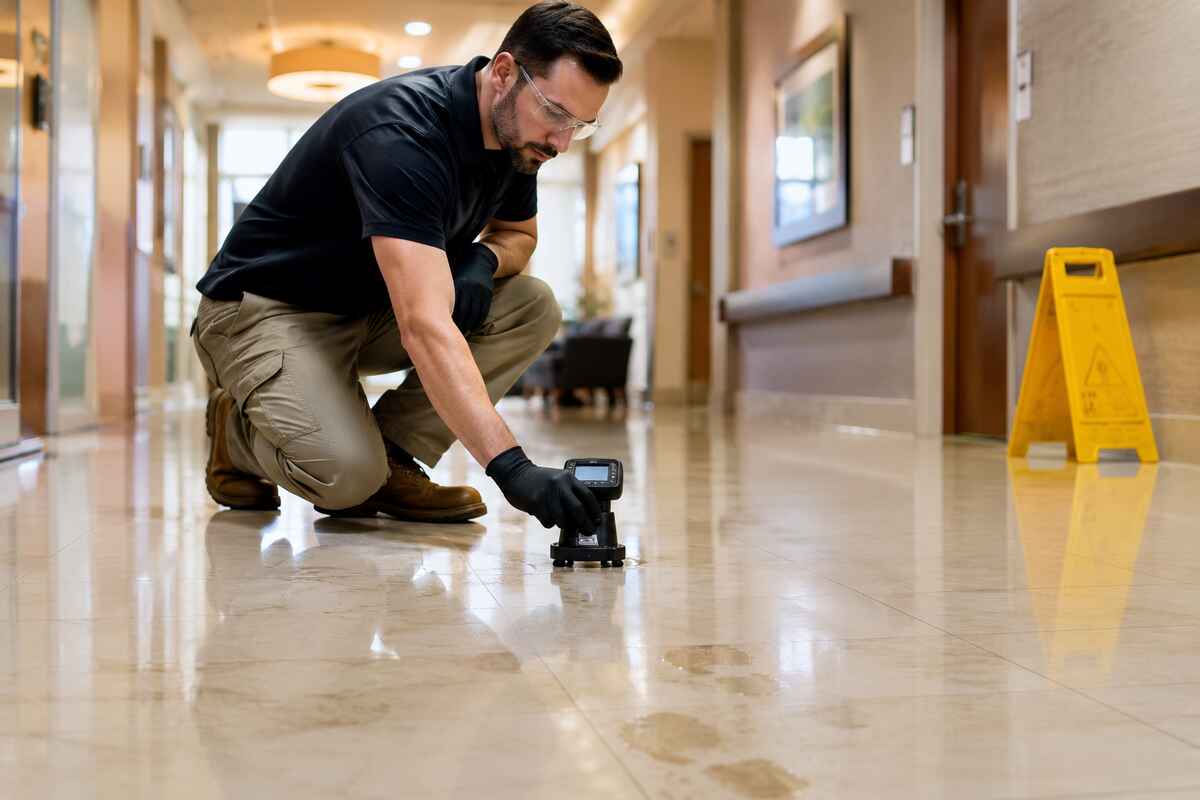
This is where Dynamic Coefficient of Friction, commonly referred to as DCOF, becomes important. At its simplest, DCOF measures how much traction exists between a person's foot and the walking surface while in motion. Because most slips occur while someone is walking rather than standing still, dynamic testing provides a more realistic picture of how a floor performs in everyday conditions.
DCOF testing replaces opinions with data. Instead of asking whether a floor "seems slippery," testing allows organizations to measure how the surface performs and compare those results against recognized safety benchmarks.
That distinction matters because slippery conditions are often subjective. One employee may describe a floor as dangerously slick. Another may say it feels completely normal. Neither observation provides objective information. Testing does.
A professional walkway evaluation uses specialized tribometry equipment to measure traction under controlled conditions. Depending on the environment and the purpose of the assessment, testing may focus on areas that experience:
Wet weather exposure
Frequent cleaning
High pedestrian traffic
Food and beverage contamination
Pool or locker room moisture
Healthcare or senior living activity
Known slip-and-fall concerns
The goal is not simply to collect numbers. The goal is to establish a documented baseline of how the floor performs. That baseline becomes extremely valuable over time.
If conditions change, future testing can be compared against previous results. If an incident occurs, there is documented evidence showing the floor was evaluated. If questions arise about maintenance practices, traction performance can be measured rather than debated.
Just as importantly, testing often prevents unnecessary corrective actions. One of the most common misconceptions in floor safety is that every concern requires treatment, coatings, or modifications. In reality, many surfaces perform within accepted standards when properly maintained.
Without testing, organizations may spend money solving a problem that does not actually exist. With testing, decisions become more precise.
Why Many Slip Problems Start After Cleaning
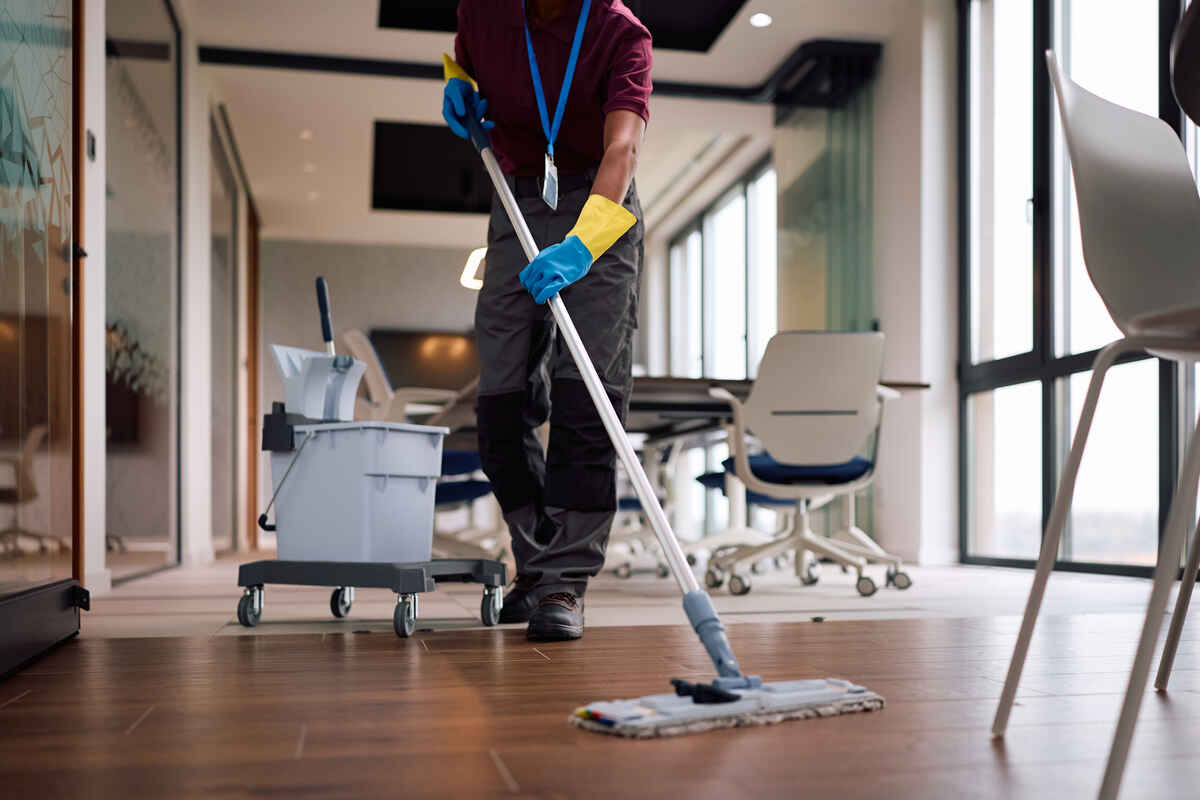
Cleaning is supposed to make a floor safer. Sometimes, it does the opposite. Many organizations assume the floor itself is the problem, but there are several reasons floors become slippery, including cleaning residue, moisture, contaminants, and maintenance practices. The floor may look clean, but the surface can still perform poorly when someone walks across it.
This is why recurring slip complaints should not automatically lead to floor treatment. The first question should be:
Is the cleaning process helping traction or hurting it?
This matters because cleaning is a system. It includes chemicals, dilution ratios, equipment, training, schedules, and staff consistency. If one part of that system is off, the floor may become slick even if the surface itself is not the main problem.
Testing helps separate the floor issue from the maintenance issue. If the surface meets standards, the next step may be adjusting cleaning methods, improving moisture control, or retraining staff. If it does not meet standards, then treatment may be appropriate. Either way, the decision should come after measurement. Not before.

A Better Question Than “Do We Need More Signs?”
A wet floor sign has a place. But it should not be the entire plan. The better question is simple: Has this floor ever been tested?
If the answer is no, the risk is still unknown. You may not need treatment. You may need better cleaning procedures, improved matting, or documentation showing the floor already performs as expected. But without measurement, you are guessing.
We help businesses and facility leaders test walking surfaces, document performance, and decide what actually needs to change. Contact Slip Stoppers of Alabama to schedule a professional walkway evaluation. Start with testing. Then decide what is necessary.