
The Most Common Places Slip Incidents Happen in Commercial Buildings
A commercial building can look completely normal until the conditions change. Rain starts coming through the entrance. A restroom floor gets wet. A kitchen begins its busiest service period. A cleaning crew finishes mopping a hallway. These everyday situations can change how a walking surface performs, especially in areas where moisture, contaminants, heavy foot traffic, and different flooring materials come together. That is why slip incidents tend to deserve closer attention in certain parts of a building, including entrances, restrooms, food-service areas, stairs, loading zones, exterior walkways, and floor transitions.
The challenge is that appearance alone does not tell you how much traction a floor provides. A surface can look clean, dry, or newly installed and still behave differently when wet or contaminated. The floor itself may not even be the main issue. Cleaning products, maintenance procedures, matting, drainage, and changing environmental conditions can all affect performance. This article looks at the areas where slip incidents commonly develop in commercial buildings, why those locations require attention, and what facility teams should evaluate before deciding whether anything needs to change.

Why Certain Areas of a Commercial Building Develop More Slip Exposure
Slip incidents are rarely caused by one factor alone. They usually develop when the walking surface, moisture or contamination, traffic patterns, and maintenance practices interact. That is why certain areas of a commercial building deserve more attention than others. The conditions in those spaces change more often, which can change how the floor performs.
Moisture is one of the most common variables. Rainwater, cleaning solution, condensation, grease, soap residue, food spills, and other contaminants can reduce traction when they collect on a walking surface. High-traffic areas add another layer of risk because more people are introducing moisture, dirt, and debris while maintenance teams have less time to respond before conditions change again.
The floor itself is only one part of the picture. Cleaning chemistry, dilution, mat placement, drainage, cleaning frequency, and maintenance procedures can all influence traction. A slippery condition may point to a surface problem, but it may also point to an operational problem. That is why the first step is to understand what is happening in the area before deciding what needs to be changed.
1. Building Entrances and Lobbies
Building entrances can change quickly when rain and outside moisture enter the picture. Water gets carried inside on shoes, umbrellas, carts, and delivery equipment. Once entrance mats become saturated, that moisture can move beyond the doorway and onto the surrounding lobby floor.
Common conditions to watch for include:
Water tracking beyond entrance mats
Saturated, undersized, or poorly positioned matting
Heavy foot traffic during wet weather
Moisture around thresholds and transition areas
Differences between high-use and lower-use entrances
Facilities teams should look at the entire path people take from outside to inside. How far does moisture travel? Does one entrance become noticeably wetter than another? Does the condition disappear when the weather clears, or does moisture remain in the traffic path? These observations can help determine whether matting, drainage, maintenance practices, traffic patterns, or the walking surface itself deserves closer evaluation.
The presence of moisture does not automatically mean the floor needs to be altered. First identify when the condition develops and what contributes to it. If there is still uncertainty about traction, testing can establish how the surface actually performs instead of relying on appearance or assumption.
2. Restrooms, Locker Rooms, and Other Wet Areas
Restrooms and similar wet areas deserve attention because water, soap, and cleaning products are introduced there throughout the day. Even when the floor looks clean, traction can change as moisture and residue build up around sinks, fixtures, entry points, and recently cleaned surfaces.
Common conditions to watch for include:
Water around sinks, dispensers, or fixtures
Soap or cleaning residue left on the floor
Wet footwear carrying moisture into adjacent areas
Leaks, overspray, or poor drainage
Floors that become noticeably more slippery after cleaning
This is where it helps to separate the surface from the process. A recurring slip concern may come from the floor itself, but it can also come from the wrong cleaning chemistry, improper dilution, incomplete rinsing, or inconsistent procedures. Before deciding the surface needs treatment, facilities teams should first identify when the problem appears and what changes immediately before it happens.
If the floor performs normally most of the day but becomes noticeably different after cleaning, that pattern is useful information. It points toward a maintenance or process issue that may be corrected without altering the floor. If the cause is still unclear, testing can help establish whether the surface is performing as expected under the conditions that matter.
3. Commercial Kitchens, Cafeterias, and Food-Service Areas
Food-service areas introduce more than water into the walking environment. Grease, oil, beverages, food debris, detergents, and cleaning solution can all affect traction, especially when employees are moving quickly between preparation, service, and cleaning tasks.
Common conditions to watch for include:
Grease or oil near cooking and preparation areas
Beverage and food spills in service zones
Detergent or cleaning residue
Wet floors during active cleaning
Contaminants carried between kitchen and customer areas
The contaminant matters because different substances affect the floor differently. A surface that performs well when dry may behave very differently when exposed to grease or soap. That does not automatically mean the floor itself is deficient. It means the condition should be evaluated in context.
Facilities teams should look for patterns. Does the problem appear during peak service? After cleaning? Near specific equipment or transition points? Identifying when and where traction changes helps narrow the cause before any corrective action is considered. If uncertainty remains, testing can help determine whether the surface or the operating conditions are driving the problem.
4. Hallways and High-Traffic Corridors
Hallways and corridors can seem low-risk because they are usually dry and predictable. That can change quickly when cleaning, leaks, tracked-in moisture, or surface wear affects one part of the route.
Common conditions to watch for include:
Freshly mopped or recently cleaned floors
Cleaning residue left behind
Moisture tracked in from entrances or nearby restrooms
Leaks or localized wet spots
Worn areas along heavily traveled paths
Patterns often reveal more than a one-time observation. A corridor may perform normally all day but become noticeably more slippery during an evening cleaning cycle. Another may only become an issue during wet weather because moisture is carried farther into the building than expected.
Facilities teams should pay attention to when the condition appears, how long it lasts, and whether the same area is involved repeatedly. If the problem follows a specific maintenance routine or environmental condition, correcting that process may be more appropriate than changing the floor itself.
5. Stairs, Landings, and Ramps
Stairs, landings, and ramps deserve closer attention because changes in traction can have more serious consequences when elevation or slope is involved. Moisture, cleaning residue, worn surfaces, and weather exposure can all change how these areas perform.
Common conditions to watch for include:
Wet or contaminated stair treads
Cleaning residue on landings
Worn walking surfaces
Exterior stairs exposed to rain
Ramps that become slippery when wet
Facilities teams should separate traction concerns from other fall hazards. Poor lighting, missing handrails, or uneven steps matter, but they are different from a surface that loses traction. Looking at each issue separately makes it easier to identify the actual cause.
Ramps also deserve specific attention because slope changes how people move across the surface. If a ramp performs differently when wet, contaminated, or recently cleaned, that pattern should be documented and evaluated before deciding what needs to change.
6. Floor Transitions and Changes in Walking Surface
A change in flooring material can create a noticeable difference in how a surface feels underfoot. Moving from carpet to tile, concrete to polished flooring, or one treated surface to another can change traction from one step to the next.
Common transition points to watch include:
Carpet meeting tile or vinyl
Exterior concrete leading into smooth lobby flooring
Older flooring meeting newly installed material
Treated and untreated sections of the same walkway
Areas where surface wear differs across the traffic path
These locations can be easy to overlook because both surfaces may appear clean and well maintained. The issue is not always visible. A newly installed floor may look better than the surface it replaced, but appearance does not establish how it performs under dry, wet, or contaminated conditions.
Facilities teams should pay attention to whether people are moving from one traction level to another unexpectedly. If a transition becomes more noticeable during rain, cleaning, or heavy traffic, that change is worth documenting and evaluating before assuming either surface needs to be altered.
7. Loading Docks, Service Entrances, and Back-of-House Areas
Loading docks, service entrances, and back-of-house routes often deal with harsher conditions than customer-facing spaces. Rain, mud, oil, grease, dust, delivery traffic, and equipment movement can all affect the walking surface throughout the day.
Common conditions to watch for include:
Water tracked in from exterior loading areas
Oil, grease, or other vehicle-related residue
Mud, dust, and debris near service entrances
Forklift and cart traffic crossing pedestrian paths
Repeated movement between indoor and outdoor surfaces
These areas can be easy to overlook because they are less visible to customers. Operationally, though, they may experience more contamination and more rapid changes in condition than a lobby or public corridor.
Facilities teams should pay attention to where contaminants enter the building, how far they spread, and whether the same locations become problematic during deliveries or bad weather. If the pattern is consistent, the next step is to determine whether the issue comes from housekeeping, moisture control, traffic flow, or the walking surface itself.
8. Exterior Walkways, Parking Areas, and Building Approaches
Slip exposure often starts before someone reaches the front door. Exterior walkways, parking areas, ramps, and building approaches are exposed to rain, mud, drainage issues, surface wear, and other conditions that can change quickly.
Common conditions to watch for include:
Standing water or poor drainage
Mud, leaves, or organic buildup
Worn or uneven surface texture
Rainwater moving toward entrances
Exterior contaminants being tracked indoors
Facilities teams should look at how outside conditions affect the rest of the building. A drainage problem several feet from the entrance can become an interior issue once water is carried onto lobby flooring. In that sense, the exterior approach and the entrance should be evaluated as part of the same walking path.
The goal is to identify where the condition begins, how it moves, and whether it appears repeatedly under the same weather or traffic conditions. That broader view helps separate an isolated surface concern from a larger moisture-control or maintenance problem.

The Pattern Behind Most High-Attention Slip Locations
The locations may be different, but the pattern is usually similar: conditions change. Rain begins, a cleaning cycle starts, a spill occurs, or traffic carries contamination into an area that was dry earlier. The location itself is not necessarily the problem. The concern develops when the walking surface, moisture or contamination, maintenance practices, and traffic conditions interact.
That is why a visual inspection has limits. A floor can look clean, new, or well maintained without showing how it performs when wet or contaminated. Facilities teams should look beyond appearance and ask what changes in the area, when it changes, and whether the same condition keeps returning.
A useful way to think about these areas is:
What is reaching the walking surface?
When does the condition appear?
Does cleaning or weather affect it?
Is the issue isolated or repeated?
Has the surface ever been measured under the conditions causing concern?
Those questions help move the conversation from assumption to evidence. If the cause is operational, the solution may involve cleaning, moisture control, matting, or maintenance. If uncertainty remains after those factors are reviewed, testing can establish a measurable baseline before any decision is made about changing the floor.
How Facilities Teams Should Evaluate Areas Where Slip Incidents Are More Likely
Once a problem area is identified, the next step is to understand what is actually changing. Start with the conditions around the incident or concern rather than jumping straight to a product or treatment. Ask when the issue appears, what contaminant is present, whether weather affects it, and whether the problem follows cleaning or maintenance activity.
Facilities teams should also review the surrounding process. That may include cleaning chemistry, dilution, rinse procedures, mat placement, drainage, maintenance schedules, and how quickly spills or moisture are addressed. These details can reveal whether the issue is operational, environmental, or tied more directly to the walking surface.
If appearance and observation cannot answer the question, measurement becomes important. A floor may look acceptable and still perform differently under wet or contaminated conditions. Testing provides a baseline that helps facilities teams document current performance and decide whether any corrective action is actually necessary.
The key is sequence: observe the condition, review the process, measure when needed, and then decide what should change.
What Should Happen After a Problem Area Is Identified?
Once a problem area has been identified, the response should depend on what the evaluation shows. The goal is not to change the floor automatically. It is to correct the actual source of the problem with the least unnecessary intervention.
If cleaning, moisture control, mat placement, drainage, or maintenance procedures are creating the condition, those issues should be addressed first. If testing shows that the surface already performs adequately, the most appropriate step may simply be to document the result and leave the floor alone.
If measured performance shows that the surface needs improvement, then the next step is to choose a corrective method that fits the material, environment, and operating conditions. That may involve surface treatment, but only after simpler operational causes have been ruled out.
The sequence matters: identify the cause, correct the process where possible, document the findings, and alter the surface only when the evidence supports it.
A Practical Walkthrough for Your Next Facility Inspection
A useful facility inspection follows the same path people take through the building. Start outside, move through the entrance, and continue through the areas where moisture, cleaning activity, traffic, and surface changes are most likely to affect walking conditions.
During the walkthrough, ask:
Where does moisture or contamination enter the walking path?
What changes during rain, cleaning, deliveries, or peak traffic?
Are mats, drainage, or housekeeping controls working as intended?
Do certain areas repeatedly become slippery under the same conditions?
Is there documented evidence showing how the surface performs?
The goal is to identify patterns before they become incident reports. When a condition keeps returning, document when it happens, what is present, and what operational factors may be contributing. That gives facilities teams a clearer basis for deciding whether the issue can be corrected through maintenance or whether the surface itself needs further evaluation.
Frequently Asked Questions About Slip Incidents in Commercial Buildings
Where do slip incidents commonly happen in commercial buildings?
Slip incidents commonly happen in areas where moisture, contaminants, cleaning activity, or surface changes are more likely to occur. Entrances, restrooms, kitchens, corridors, stairs, ramps, loading areas, exterior walkways, and floor transitions deserve closer attention because conditions in these areas can change throughout the day.
Why are building entrances common areas for slip hazards?
Entrances are exposed to changing weather and heavy foot traffic. Rainwater can be carried inside on shoes, umbrellas, carts, and delivery equipment, especially when mats become saturated or moisture travels beyond the entrance area.
Can cleaning make a floor more slippery?
Yes. Cleaning can affect traction when the wrong chemistry, improper dilution, residue, excess solution, or inconsistent procedures are involved. That is why facilities teams should review the cleaning process before assuming the floor itself needs to be altered.
Does a shiny floor mean it is slippery?
No. Appearance alone does not establish how much traction a floor provides. A polished or newly installed surface may perform adequately, while a floor that looks ordinary may behave differently when wet or contaminated. Measurement is the more reliable way to evaluate performance.
Are wet-floor signs enough to prevent slip incidents?
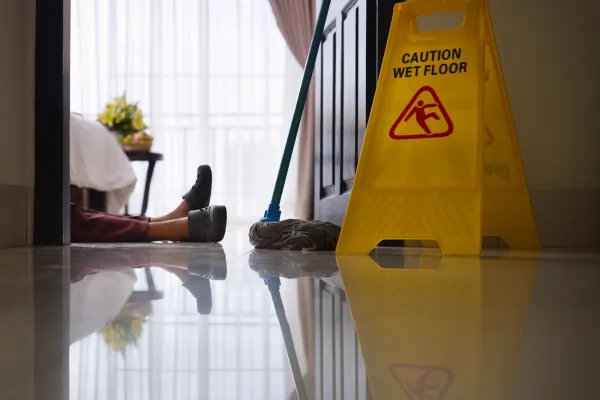
Wet-floor signs can warn people that a condition exists, but they do not remove moisture, correct a cleaning problem, improve drainage, or establish how the walking surface performs. They should support hazard control, not replace it.
How can a facility determine whether a floor has adequate traction?
Start by reviewing when and where the concern appears, along with cleaning, moisture, and maintenance conditions. If those observations do not provide a clear answer, professional walkway testing can establish a measurable baseline and help determine whether corrective action is actually needed.

The Bottom Line
Slip incidents in commercial buildings tend to develop where conditions change. Entrances get wet, restrooms collect moisture, kitchens introduce grease and spills, and cleaning routines can affect traction in otherwise normal areas. The common thread is not simply the floor. It is the interaction between the surface, the environment, and the way the space is maintained.
That is why the best response starts with understanding the condition before changing anything. Identify where the problem appears, look for patterns, review the surrounding process, and measure performance when observation is not enough. If the floor already performs as it should, document it and leave it alone. If it does not, the next step should be based on evidence rather than assumption.
Documentation matters too. If an area has been evaluated, keep a record of what was assessed, when it was checked, and what the results showed. That gives facilities teams a baseline they can refer to when conditions change, maintenance procedures are updated, or questions arise later. For the person responsible for the building, being able to show that a concern was properly evaluated is far more useful than relying on memory or appearance.
You cannot prevent every unexpected condition inside a commercial building, but you can remove unnecessary uncertainty. Pay closer attention to the areas where conditions change most often, correct operational problems when you find them, and test when you need a clear answer about traction. The goal is straightforward: understand how the walking surface actually performs, document what you find, and change only what the evidence says needs changing.
Know How Your Floors Actually Perform
If you have walkways that become noticeably different during rain, cleaning, heavy traffic, or other changing conditions, the next step is to establish a measurable baseline.
A walkway evaluation can help you determine how those surfaces actually perform, document the findings, and decide whether anything needs to change. If the floors already meet recognized standards, the appropriate recommendation may simply be to document the results and leave them alone.