
How Moisture Changes Floor Traction in Commercial Facilities
Why Moisture Changes Floor Traction
Not All Wet Floors Perform the Same
Common Sources of Moisture Inside Commercial Buildings
Why Cleaning Can Make a Floor More Slippery
Moisture Control Is More Than Putting Down a Wet Floor Sign
How Floor Traction Is Measured
Why Testing Matters More Than Assumptions
Ways to Improve Wet Floor Traction
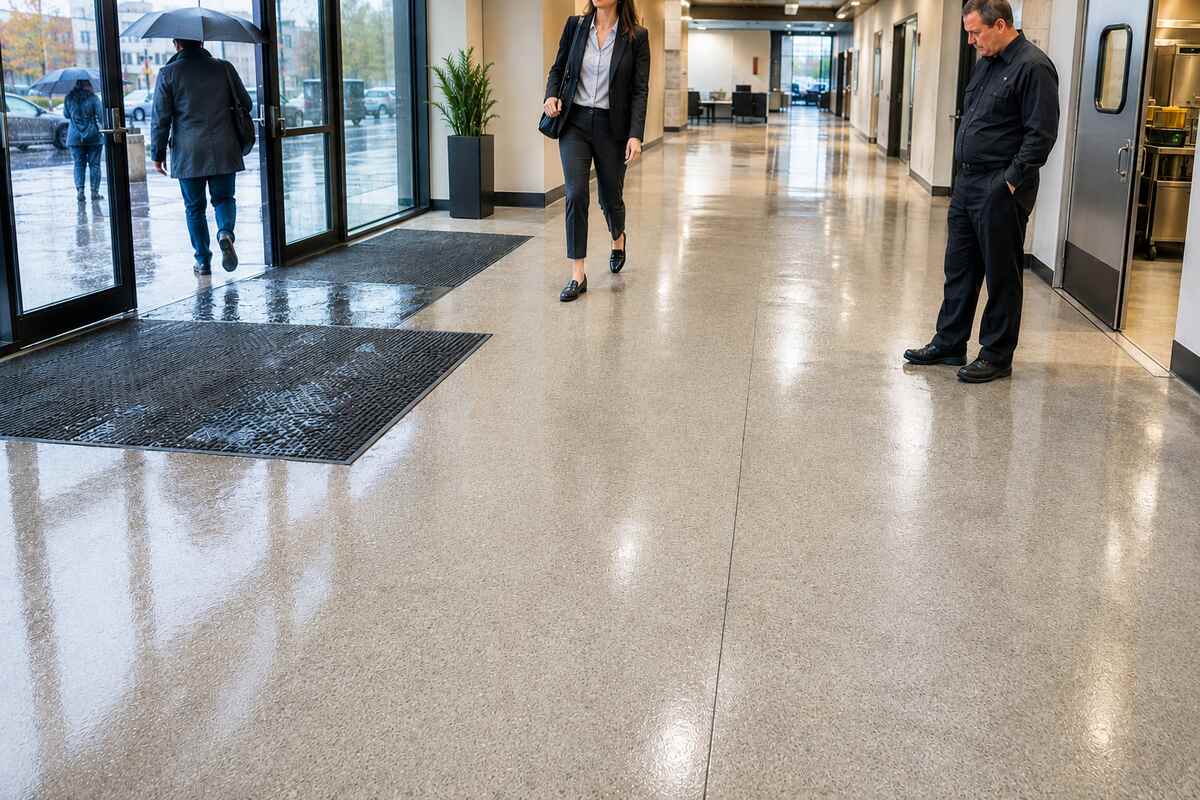
A commercial floor can seem perfectly safe during a dry afternoon and become a concern minutes after rain begins or a cleaning crew finishes mopping. The floor may look almost exactly the same, but moisture changes the interaction between the surface and a person’s footwear. That change in wet floor traction can create an exposure that is difficult to recognize through appearance alone.
For a facilities director, this is a practical operating issue. Entrances, corridors, restrooms, kitchens, production areas, and other high-traffic spaces are regularly exposed to water, cleaning solutions, condensation, grease, and tracked-in moisture. You need to know how those surfaces perform during normal building conditions, not only when they are clean and dry.
Moisture does not automatically make every floor unsafe. Some surfaces maintain adequate traction when wet. Others lose traction quickly. Surface texture, flooring material, wear, cleaning procedures, contaminants, footwear, and the amount of moisture all influence the result.
This is why appearance, age, and material alone cannot confirm wet floor slip resistance. A newly installed floor may perform poorly when exposed to water. An older surface may still provide acceptable traction. Until the floor is evaluated, either conclusion is an assumption.
A visual inspection still matters. It can reveal standing water, saturated mats, damaged flooring, or visible residue. What it cannot do is establish how the surface performs when someone walks across it. If the floor has never been tested under the conditions causing concern, its actual performance remains unknown.
Effective walkway safety starts with understanding where moisture comes from, how it changes floor traction, and whether the surface maintains adequate performance when wet. Once that baseline is established, you can determine whether the right response is improved cleaning, better moisture control, staff education, targeted surface treatment, or no physical change at all.
The goal is not to alter every floor that gets wet. It is to test the condition, document the result, and address only what needs to change.
What Is Floor Traction?
Before looking at how moisture affects a walking surface, it helps to understand what floor traction actually is. The term is often used interchangeably with "slip resistance," but traction is really about how well a person's footwear grips the floor while walking.
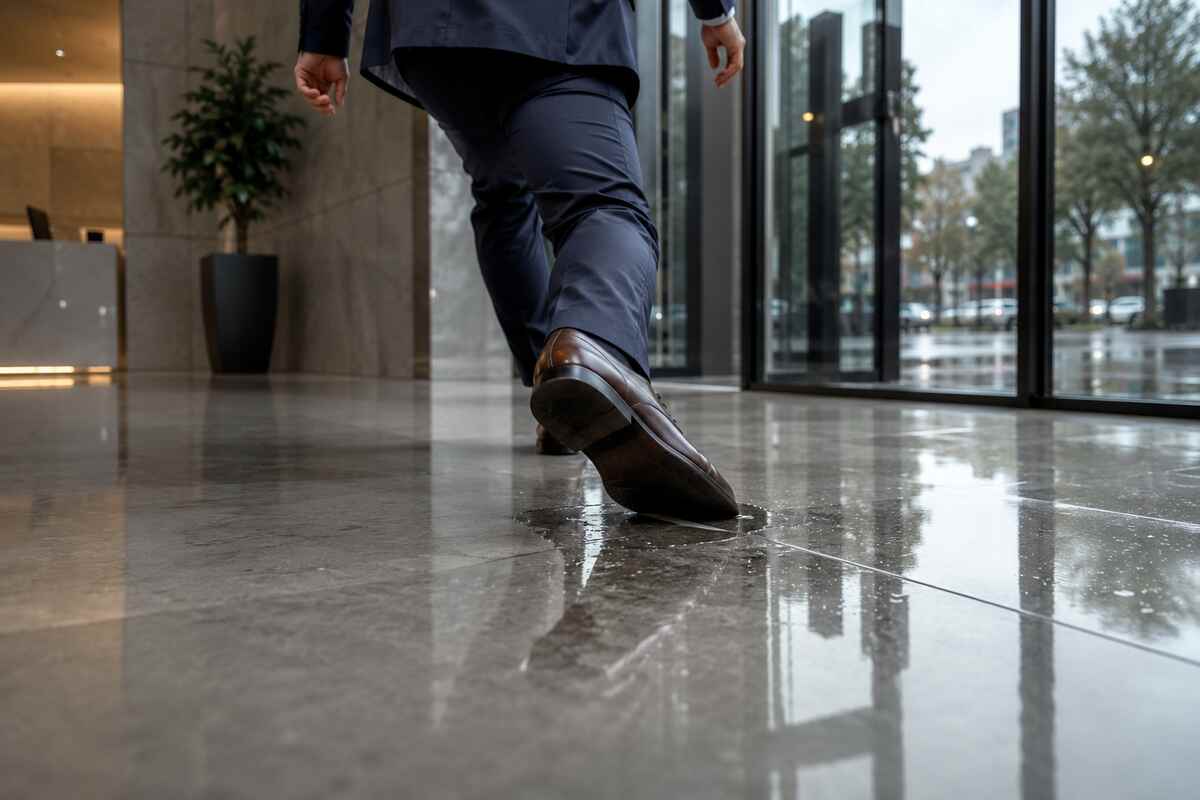
Every step depends on friction, the force that resists movement between two surfaces. In this case, those surfaces are the bottom of your shoe and the floor beneath it. When there is enough friction, your foot stays stable as you walk. When friction decreases, your foot is more likely to slide unexpectedly.
Many people assume traction is a fixed characteristic of the floor itself. In reality, it is influenced by the interaction of three variables:
The walking surface
The footwear
The conditions between them, such as water, cleaning solution, grease, dust, or other contaminants
That means the same floor can provide very different levels of traction throughout the day. A lobby entrance may perform well on a dry morning but behave differently after employees and visitors track rainwater inside. Likewise, a hallway may feel secure before routine cleaning and become more slippery afterward if cleaning residue remains on the surface.
This is why visual appearance can be misleading. A floor that looks clean, polished, or newly installed may not provide the same traction as another floor with a similar appearance. Conversely, an older floor isn't automatically unsafe simply because it shows signs of wear.
Understanding this distinction is important because effective walkway safety isn't based on how a floor looks. It's based on how the floor performs under the conditions people actually experience. That is why evaluating traction under real-world conditions is far more valuable than relying on assumptions or appearance alone.
Why Moisture Changes Floor Traction
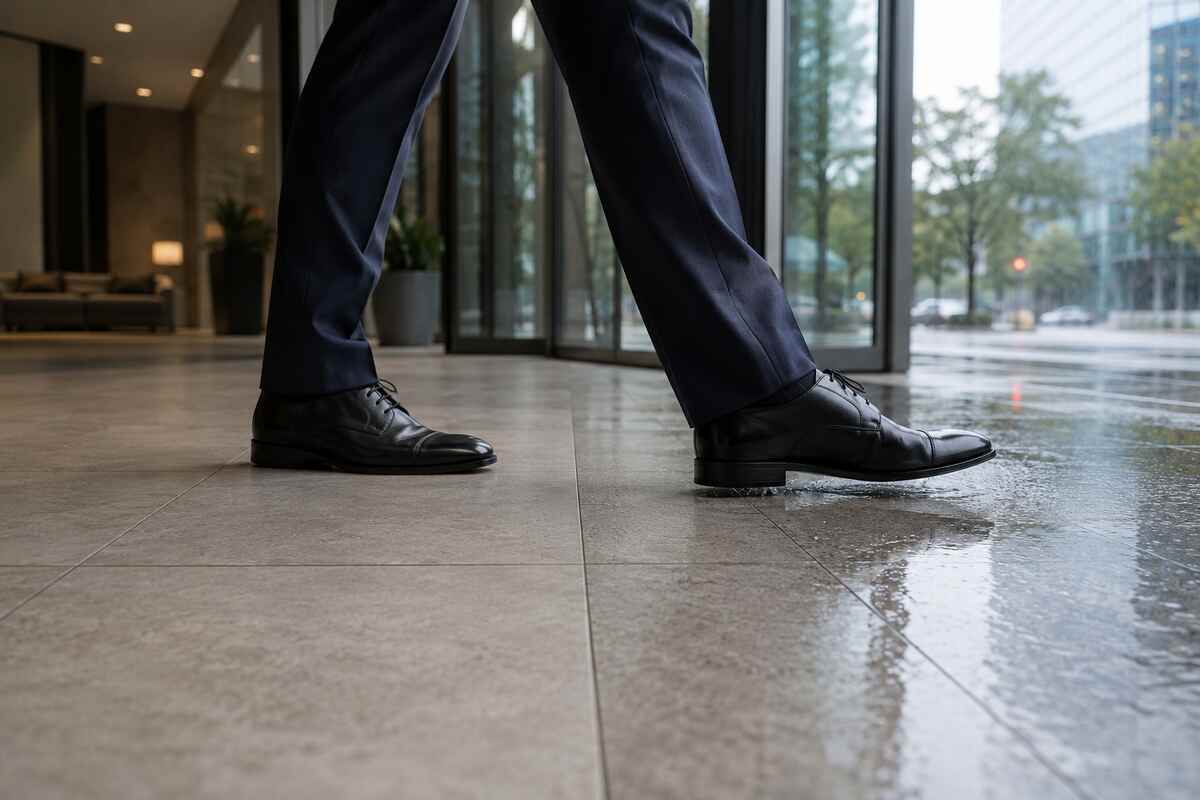
Moisture changes the way a shoe interacts with the floor. Even a thin layer of water can reduce the direct contact between the sole of the shoe and the walking surface, making it easier for the foot to slide instead of grip. The amount of change depends on the floor, the footwear, and the conditions present at that moment.
Think about driving on a wet road. The pavement hasn't changed, but the presence of water affects how your tires grip the surface. A similar principle applies to pedestrian traffic. The floor may look the same as it did an hour earlier, but the addition of moisture can change its performance underfoot.
Not every floor responds to moisture in the same way. Some flooring materials retain adequate traction when wet, while others experience a noticeable reduction in slip resistance. Surface texture, finish, wear, and maintenance all influence how well a floor continues to perform once moisture is introduced.
The source of the moisture also matters. Rainwater tracked through an entrance creates different conditions than a freshly mopped hallway. A kitchen floor contaminated with water and grease behaves differently than a restroom floor exposed to occasional splashing. Cleaning solution left behind after mopping may affect traction differently than clean water alone.
The amount of moisture is only part of the equation. A small puddle in a low-traffic storage room presents a different level of exposure than a thin, nearly invisible film of water spread across the main entrance during the morning rush. In many facilities, the greatest risk comes from moisture that people don't immediately notice.
This is why a floor that performs well under dry conditions cannot automatically be assumed to perform the same way when wet. The conditions have changed, and with them, the floor's ability to provide traction may change as well.
Understanding this relationship helps facilities directors move beyond reacting to individual incidents. Instead of asking, "Is this floor slippery?" the better question becomes, "How does this floor perform when exposed to the conditions it experiences every day?" That shift in thinking leads to better maintenance decisions, more effective risk management, and a clearer understanding of when further evaluation is appropriate.
Not All Wet Floors Perform the Same
One of the biggest misconceptions about walkway safety is that all wet floors behave the same way. They don't. Two floors can look nearly identical, receive the same amount of foot traffic, and be exposed to the same rainstorm, yet perform very differently under wet conditions. That's because traction depends on much more than the presence of water. It depends on how the floor, the moisture, and the pedestrian interact.
The flooring material is one factor. Porcelain tile, polished concrete, natural stone, vinyl composition tile (VCT), epoxy coatings, and sealed concrete each have different surface characteristics. Some materials are naturally better at maintaining traction when wet, while others become significantly more slippery depending on their finish and condition.
Surface texture also plays an important role. A floor with microscopic texture may continue providing adequate grip even when moisture is present, while a highly polished surface can lose traction more quickly. These differences are often too subtle to recognize visually, which is why appearance alone is a poor indicator of performance.
A floor's condition can also change over time. Years of foot traffic gradually wear away surface characteristics. Routine maintenance, burnishing, waxing, or repeated exposure to cleaning chemicals may alter how a floor performs without changing how it looks. Even two areas made from the same flooring material can develop different traction characteristics based on how they are used and maintained.
Environmental conditions add another layer of complexity. An interior hallway that rarely gets wet may perform consistently throughout the year. An entrance exposed to rain, humidity, or tracked-in moisture experiences constantly changing conditions. The same flooring material may produce very different results simply because one location is exposed to moisture more frequently.
This is one reason assumptions often lead to poor decisions. A facilities director might assume every entrance requires surface treatment because one area has experienced slip incidents. Another might assume no action is needed because the flooring is new or has never generated complaints. Neither conclusion is reliable without understanding how each surface actually performs.
The goal isn't to classify certain flooring materials as "safe" and others as "unsafe." Every walking surface should be evaluated based on its real-world performance, its environment, and how it is maintained. Understanding these differences helps facilities teams focus their attention where it matters most instead of applying the same solution everywhere.
Once you recognize that wet floors do not all behave the same way, the next question becomes equally important: where is all that moisture coming from in the first place? Identifying those sources is often the first step toward reducing slip-and-fall risk before it leads to an incident.
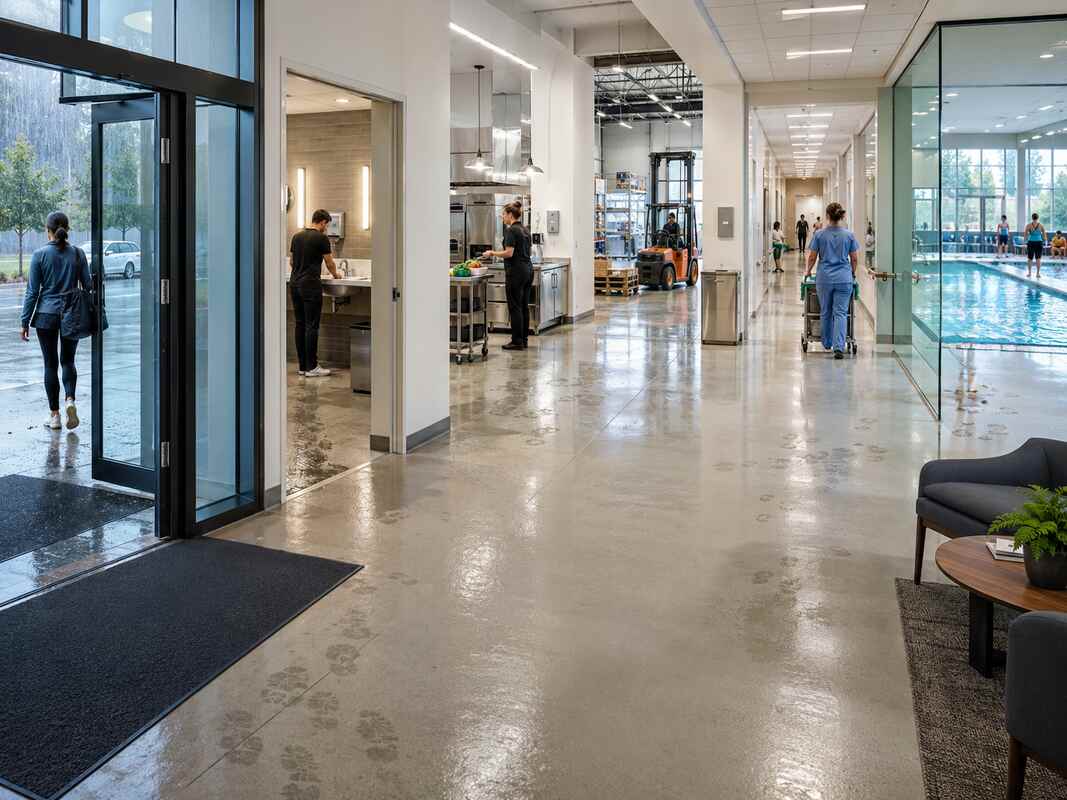
Common Sources of Moisture Inside Commercial Buildings
When people think about slip hazards, they often picture a large spill or a freshly mopped floor. In reality, most moisture-related traction problems develop during normal day-to-day operations. Water enters buildings in predictable ways, and if those conditions are not managed properly, they can gradually increase slip-and-fall risk.
Understanding where moisture comes from helps facilities directors identify high-risk areas before an incident occurs.
Building Entrances
Entrances are among the most challenging areas to manage because they are directly affected by the weather. During rain, snow, or icy conditions, people track water, mud, and debris into the building with every step. Even with entrance mats in place, moisture often extends well beyond the doorway as foot traffic carries it deeper into the facility.
The challenge isn't just the amount of water. It's the constant change in conditions throughout the day. An entrance that performs well during dry weather may experience completely different traction once moisture begins accumulating.
Restrooms
Commercial restrooms are another common source of moisture. Water from sinks, hand dryers, plumbing fixtures, and routine cleaning can create localized wet areas throughout the day. Because these spaces experience continuous use, moisture can accumulate long before scheduled cleaning rounds.
Even small amounts of water can create slippery conditions if they remain unnoticed or are combined with smooth flooring surfaces.
Kitchens and Food Service Areas
Commercial kitchens present unique challenges because water is rarely the only contaminant present. Grease, cooking oils, food residue, and cleaning chemicals can mix with moisture, creating conditions that are much different from those found elsewhere in the building.
Frequent washdowns, spills, and high employee traffic make these environments especially dependent on proper maintenance procedures and flooring that performs well under wet conditions.
Healthcare Facilities
Hospitals, clinics, and long-term care facilities are cleaned more frequently than most commercial buildings. While those cleaning procedures are essential, they also increase the likelihood of floors being wet during normal operations.
In addition to routine cleaning, moisture may come from medical equipment, patient care activities, weather-related traffic, or accidental spills. Because many occupants have limited mobility, maintaining reliable traction becomes even more important.
Manufacturing and Industrial Facilities
Industrial environments often introduce moisture from production processes rather than weather. Water, coolants, lubricants, oils, and washdown procedures can all affect floor traction. Some areas may remain damp throughout an entire shift, requiring ongoing monitoring rather than occasional cleanup.
Facilities that rely on forklifts, carts, or heavy equipment must also consider how vehicle traffic spreads moisture and contaminants across different work areas.
Fitness Centers, Pools, and Recreational Facilities
Few environments experience more consistent exposure to water than aquatic and fitness facilities. Swimmers moving between pools, locker rooms, and common areas continuously transfer moisture throughout the building. Showers, splash zones, and high humidity create conditions where wet floors are expected rather than occasional.
Managing these environments requires a combination of appropriate flooring, effective drainage, moisture control, and consistent maintenance practices.
Moisture Is Part of Normal Operations
The common thread across every facility is that moisture cannot be eliminated completely. Rain will continue to fall. Floors will continue to be cleaned. Equipment will occasionally leak. Spills will happen.
The objective isn't to create a perfectly dry building. It's to understand where moisture regularly occurs, how those conditions affect floor traction, and whether each walking surface continues to perform safely under the conditions people experience every day. Once those areas are identified, facilities can focus their attention where it has the greatest impact instead of reacting after someone has already been injured.
Why Cleaning Can Make a Floor More Slippery
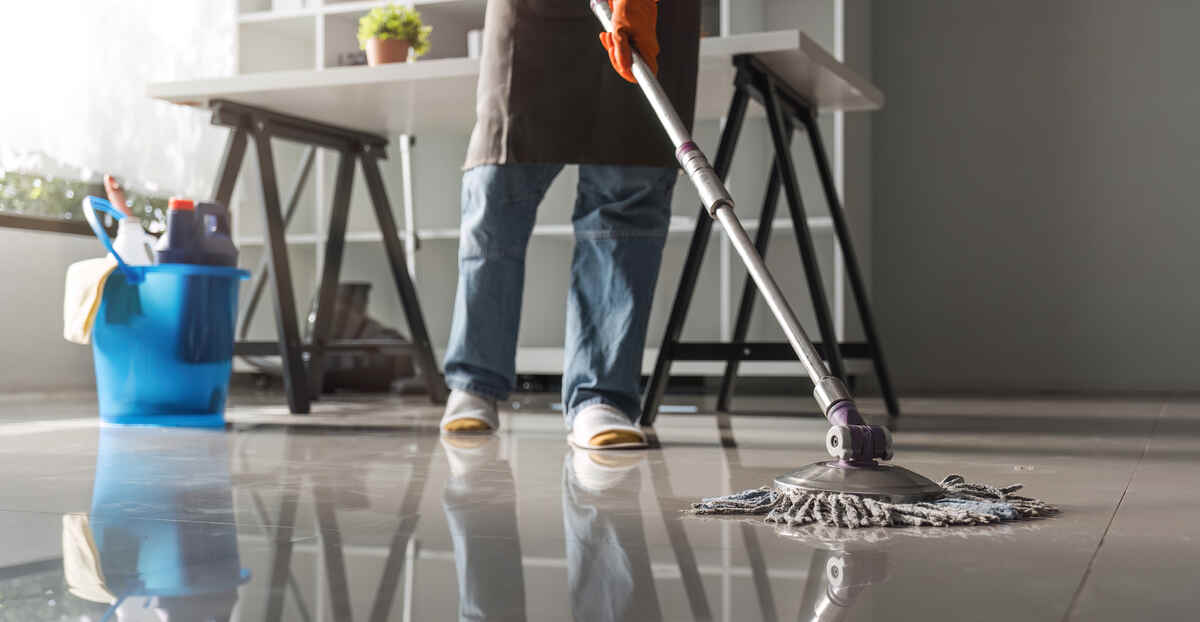
Cleaning is essential for maintaining safe walking surfaces, but the way a floor is cleaned can have a significant impact on its traction. In some cases, the cleaning process itself creates the conditions that lead to slips.
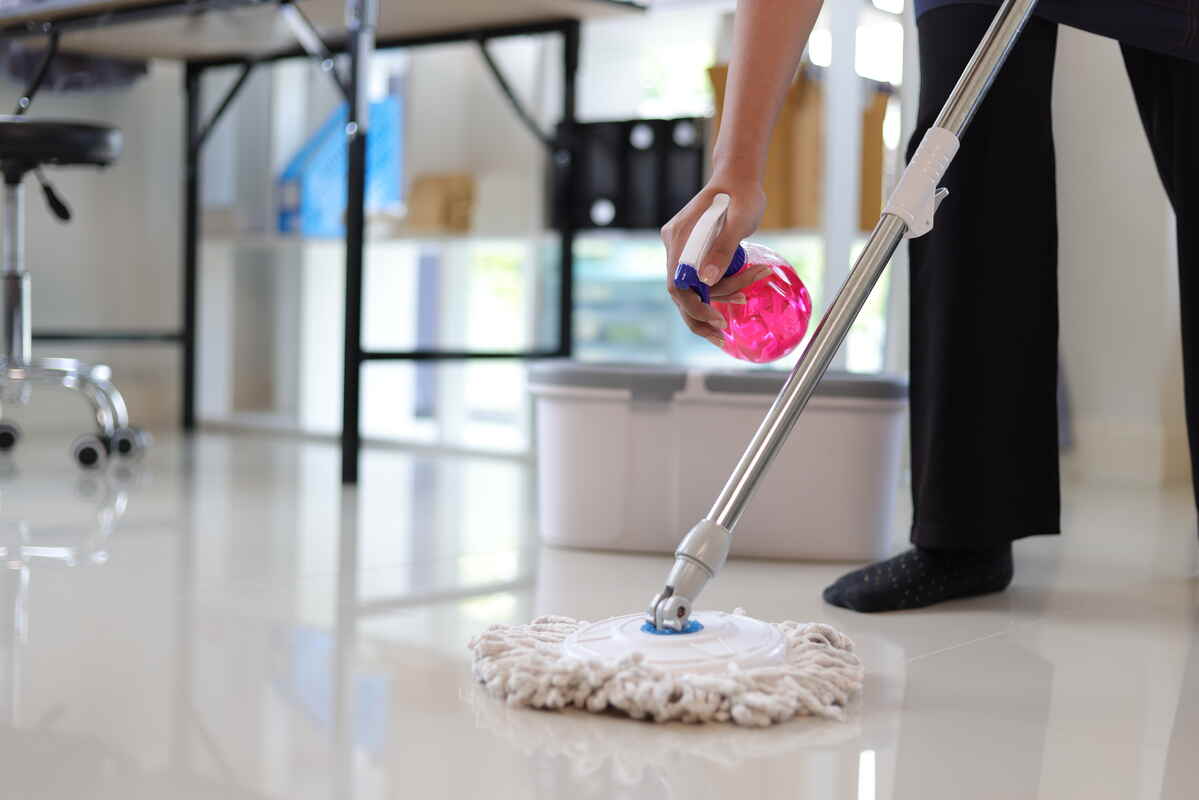
One common issue is using too much cleaning chemical or mixing it at the wrong dilution. As the floor dries, residue can remain on the surface, creating a thin film that changes how footwear grips the floor. The same can happen when dirty mop water spreads grease, soil, or contaminants instead of removing them.
Inconsistent cleaning practices can also affect floor performance. Different products, equipment, or procedures from one shift to another may produce different results, even on the same flooring material. A floor may look clean while its traction gradually changes over time.
For that reason, it's important to evaluate cleaning methods before assuming the floor itself is the problem. In many situations, improving cleaning procedures, using the correct chemistry, or providing additional staff training can restore traction without altering the walking surface.
Moisture Control Is More Than Putting Down a Wet Floor Sign
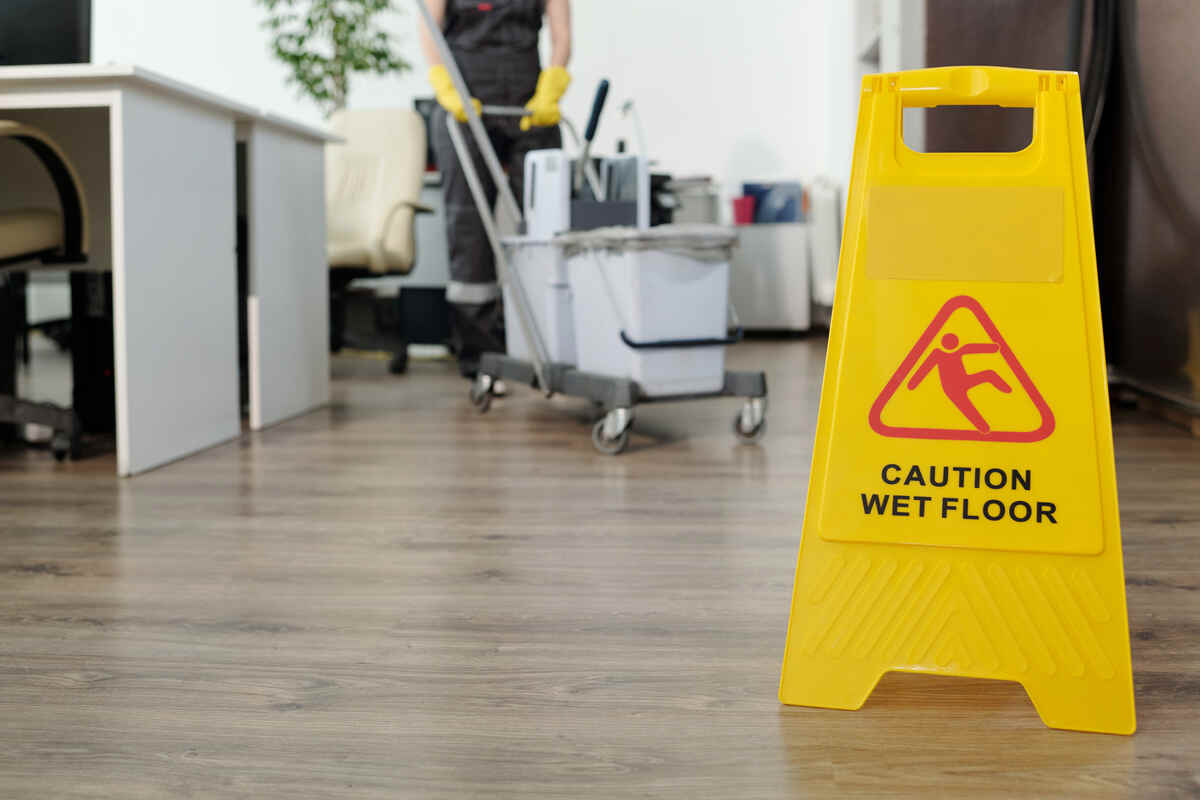
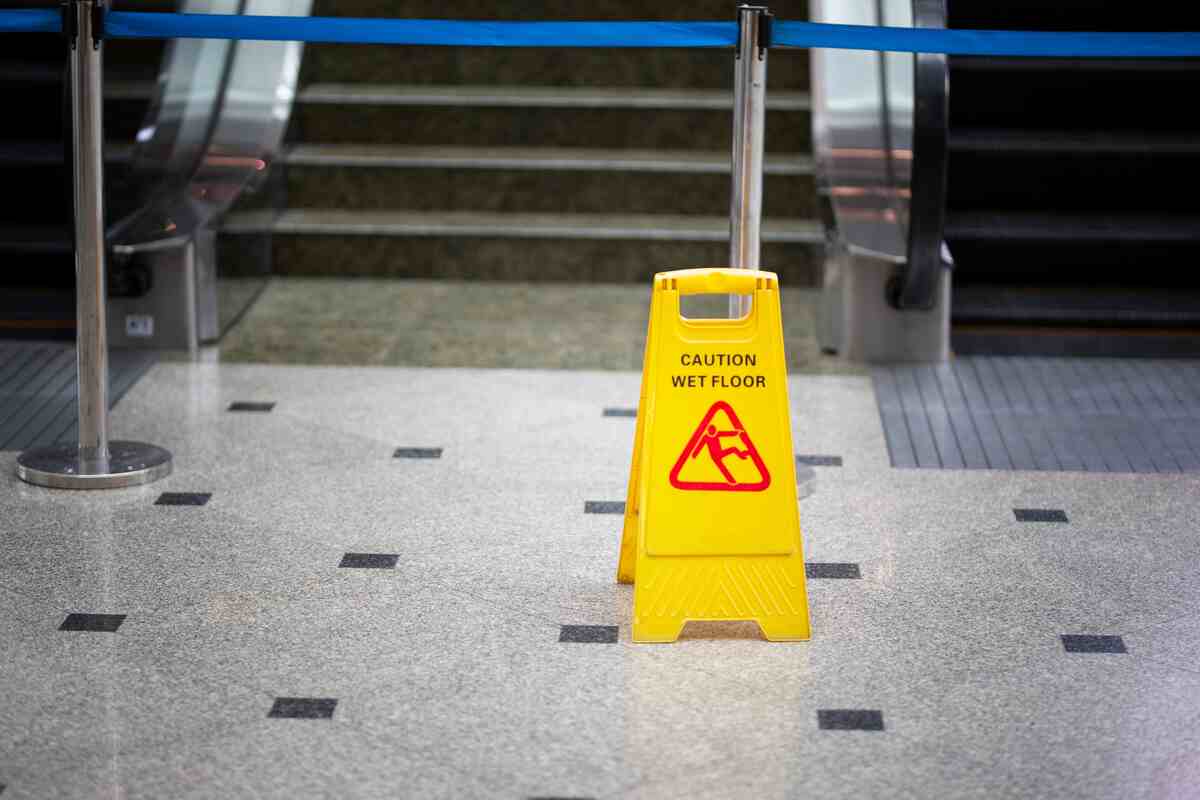
When moisture appears on a walking surface, the immediate response is often to place a wet floor sign nearby. While warning signs have an important role, they don't address the condition that caused the hazard in the first place.
Effective moisture control begins by identifying where water is coming from and preventing it from spreading throughout the facility. That may involve using properly sized entrance mats, improving drainage, repairing leaks, adjusting cleaning schedules, or addressing condensation from HVAC systems. In high-traffic areas, routine inspection and prompt cleanup are just as important as the initial response.
It's also important to recognize that mats and warning signs have limitations. Entrance mats become less effective once they are saturated, and warning signs rely on people noticing them and changing their behavior. Neither one measures how the floor is actually performing under wet conditions.
The goal is to reduce moisture whenever possible and manage the areas where it cannot be avoided. When moisture is part of normal operations, understanding how the floor performs under those conditions is a more reliable approach than relying on temporary warnings alone.
How Floor Traction Is Measured
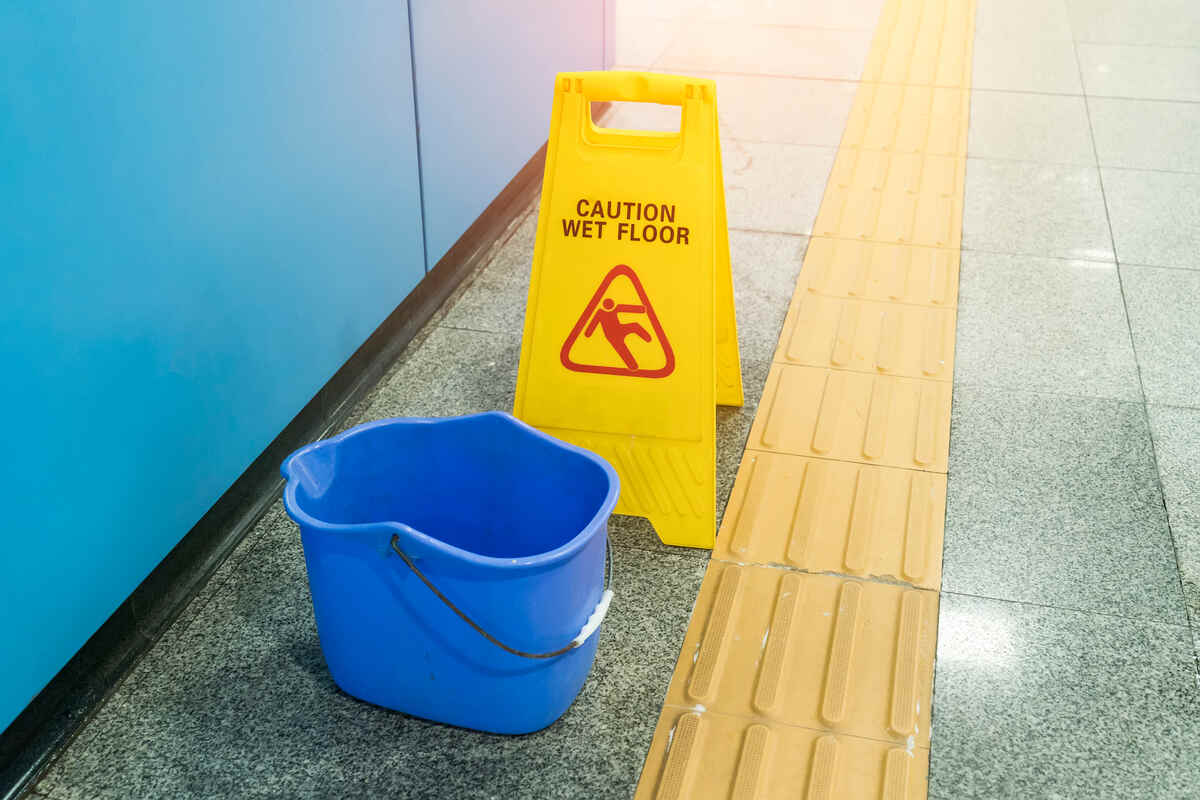
Looking at a floor doesn't tell you how much traction it provides. Even experienced facilities professionals cannot accurately determine slip resistance based on appearance alone. The only reliable way to understand how a floor performs is to measure it.
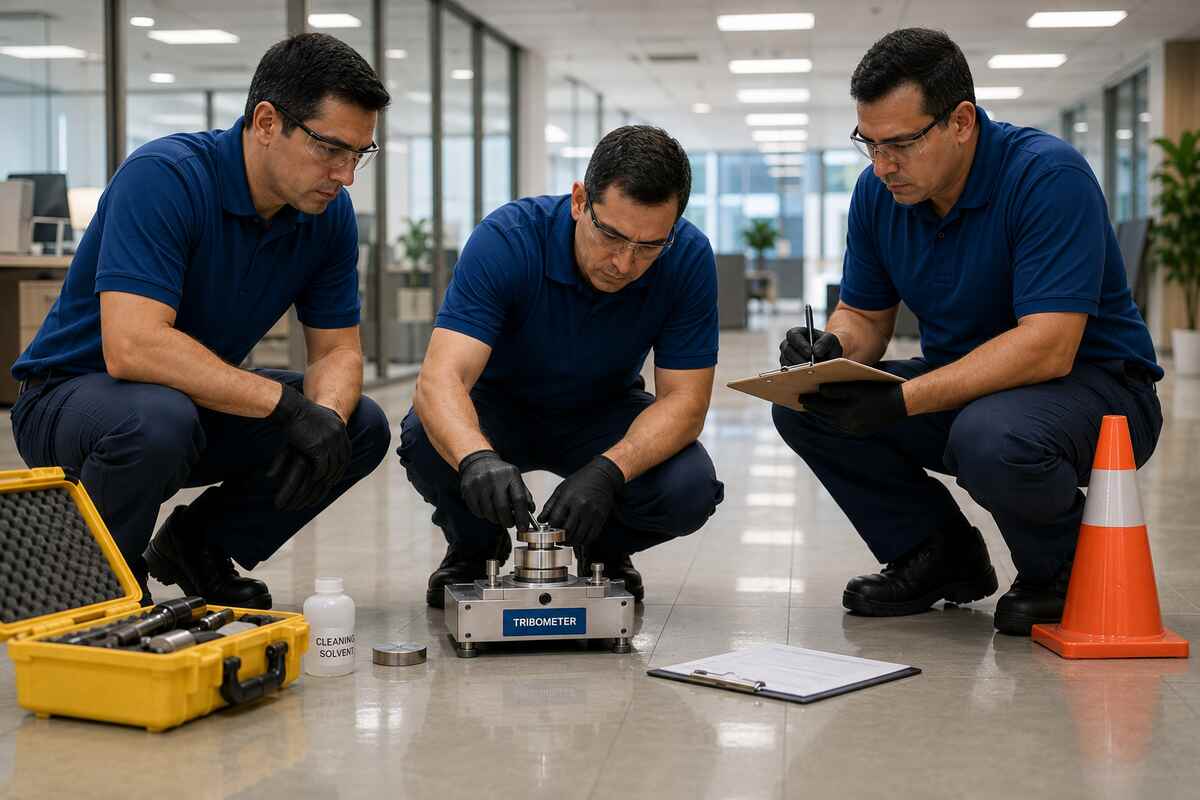
One of the most widely recognized methods is Dynamic Coefficient of Friction (DCOF) testing. In simple terms, DCOF measures how much traction a walking surface provides while a person is moving across it. Unlike visual inspections or subjective opinions, the results are objective and repeatable.
The testing process follows established industry standards, such as ANSI/NFSI guidelines, to evaluate whether a floor provides an acceptable level of traction under the conditions being tested. Rather than relying on assumptions, facilities receive measured data that establishes a baseline for future comparisons.
That baseline is valuable for more than identifying potential hazards. It helps facilities directors make informed maintenance decisions, prioritize areas that need attention, and document that a walking surface has been professionally evaluated. If the floor already meets recognized standards, the data may show that no physical changes are necessary. If it doesn't, the results help determine the most appropriate corrective action.
Testing replaces uncertainty with measurable information. Instead of asking whether a floor "feels slippery," you have documented results that show how it actually performs.
Why Testing Matters More Than Assumptions
Understanding why testing matters begins with recognizing the limits of assumptions. A floor may look clean, feel stable under normal conditions, and have no history of reported incidents, but none of those factors confirms how it actually performs when people are walking across it.
It's common to hear statements like, "We've never had anyone fall," or "These floors were installed only a few years ago." While those observations may be true, they don't provide evidence of a floor's slip resistance. Weather, cleaning procedures, foot traffic, and normal wear can all affect how a floor performs over time.
Visual inspections are still important because they help identify obvious hazards such as standing water, damaged flooring, loose mats, or debris. What they cannot do is determine whether a walking surface provides adequate traction under wet conditions. Two floors may look identical yet perform very differently when exposed to moisture.
This is why testing matters. Objective floor traction testing replaces assumptions with measurable data. Instead of relying on appearance or opinion, facilities receive documented results showing how a floor performs under the conditions that matter most. That information helps determine whether the floor already meets recognized standards or whether improvements to cleaning procedures, moisture control, or the walking surface itself should be considered.
Testing doesn't exist to prove that every floor has a problem. It exists to provide the information needed to make informed decisions. When maintenance and safety decisions are based on measured performance instead of assumptions, facilities can better prioritize resources, document due diligence, and reduce slip-and-fall risk before an incident occurs.
Ways to Improve Wet Floor Traction
Once the source of the problem has been identified, the next step is choosing the right solution. That doesn't always mean altering the floor. In many cases, improving traction starts with addressing the conditions that are affecting the surface rather than the surface itself.
A practical approach is to begin with the least invasive corrective measures and only consider more extensive interventions when they are necessary.
Improve Cleaning Procedures
Many traction problems can be traced back to maintenance practices. Using the correct cleaning chemistry, following recommended dilution ratios, changing mop water regularly, and training custodial staff on consistent procedures can significantly improve floor performance.
Control Moisture at the Source
Reducing the amount of moisture reaching the floor is often one of the most effective solutions. Proper entrance matting, prompt spill cleanup, leak repairs, improved drainage, and managing HVAC condensation all help reduce the conditions that contribute to slip hazards.
Evaluate the Walking Surface
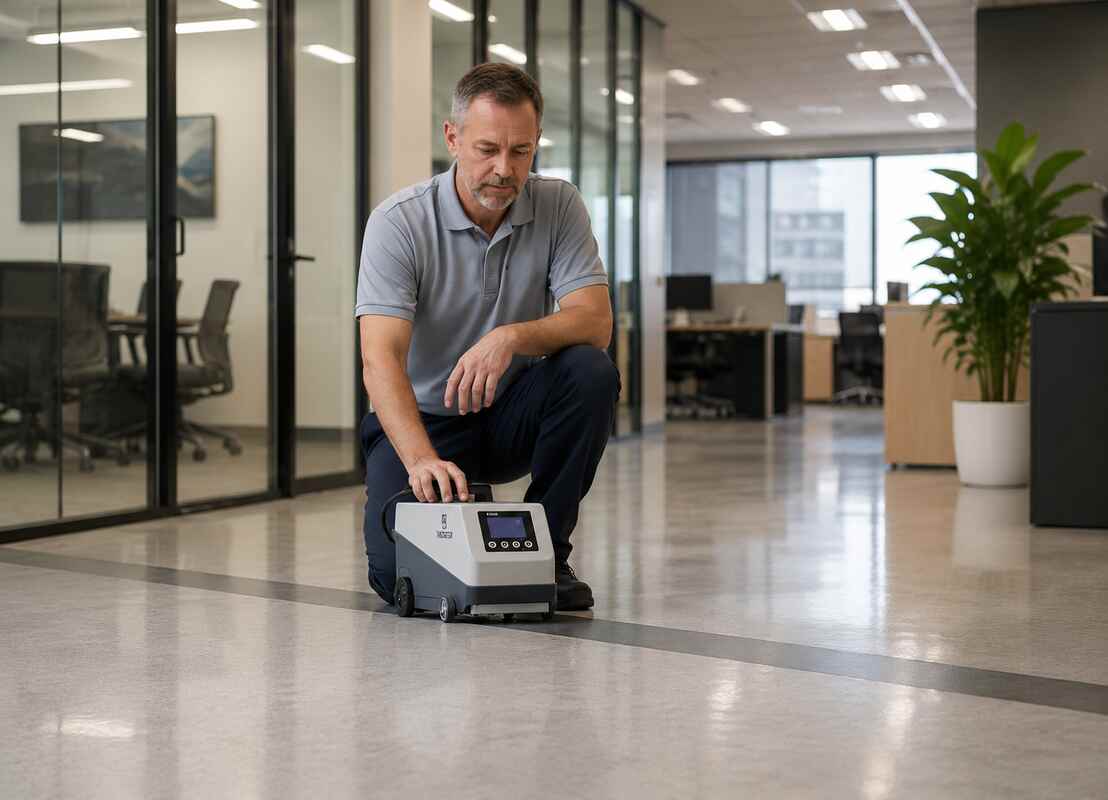
If cleaning procedures and moisture control have been addressed but concerns remain, the floor should be evaluated to determine how it performs under wet conditions. Objective testing helps determine whether the surface already provides adequate traction or whether additional action is warranted.
Apply Surface Treatments Only When Needed
If testing shows that traction falls below acceptable levels, a surface treatment may be an appropriate solution. Depending on the flooring material, this may involve a chemical surface treatment that improves traction while preserving the floor's appearance.
Some situations may require an anti-slip coating, but coatings should generally be considered after other options have been evaluated. They are one tool among many, not the default solution.
The most effective approach is to match the solution to the actual problem. Sometimes that means changing a cleaning procedure. Sometimes it means improving moisture control. Sometimes it means treating the floor. The important step is understanding what the floor needs before deciding how to address it.
Common Misconceptions About Wet Floor Safety
Misconceptions about floor safety often lead to poor maintenance decisions. Many of these assumptions seem reasonable on the surface, but they don't reflect how floors actually perform under real-world conditions.
"The Floor Looks Fine."
A floor's appearance says very little about its traction. A clean, polished, or newly installed floor may still provide inadequate grip when moisture is present. Likewise, an older floor may continue to perform well under wet conditions. Appearance is not a reliable measure of slip resistance.
"We've Never Had a Slip-and-Fall Incident."
The absence of previous incidents doesn't mean the risk doesn't exist. Conditions change over time as floors wear, cleaning procedures evolve, and weather patterns affect the building. Many organizations don't discover a traction problem until after someone has already been injured.
"Wet Floor Signs Solve the Problem."
Warning signs are an important temporary safety measure, but they don't improve the traction of the walking surface. They alert people to a potential hazard while the underlying condition is being addressed. If moisture is a recurring issue, the long-term solution is to identify why it occurs and evaluate how the floor performs under those conditions.
"Every Wet Floor Needs an Anti-Slip Coating."
Not every floor requires a coating or surface treatment. In many cases, improving cleaning procedures, controlling moisture, or correcting maintenance practices is enough to address the issue. Surface treatments should be considered only after the floor has been evaluated and other practical solutions have been reviewed.
"All Slip-Resistant Floors Stay Slip-Resistant Forever."
Floor performance can change over time. Normal wear, improper maintenance, cleaning residue, and repeated exposure to contaminants may all affect traction. Periodic evaluation helps determine whether the floor continues to perform as expected instead of relying on assumptions based on its original condition.
The common thread behind each of these misconceptions is the assumption. Effective walkway safety isn't based on how a floor looks, how old it is, or whether an incident has happened before. It's based on understanding how the floor performs under the conditions people experience every day.

What This Means for Your Facility
Moisture is part of everyday operations, but uncertainty doesn't have to be. Understanding how your floors perform under wet conditions allows you to make informed decisions instead of relying on appearance or assumptions.
In many cases, improving floor safety starts with better cleaning procedures or moisture control rather than changing the floor itself. When questions remain, objective testing provides the answers needed to determine the right course of action.
If you're unsure how your floors perform when they're wet, Slip Stoppers of Alabama can help. Our professional walkway evaluations and DCOF testing provide the measured data you need to understand your floor's performance and determine whether any corrective action is necessary.
To schedule a walkway evaluation, call Slip Stoppers of Alabama at (205) 473-2925.