
How to Evaluate High-Risk Walking Areas in Your Facility
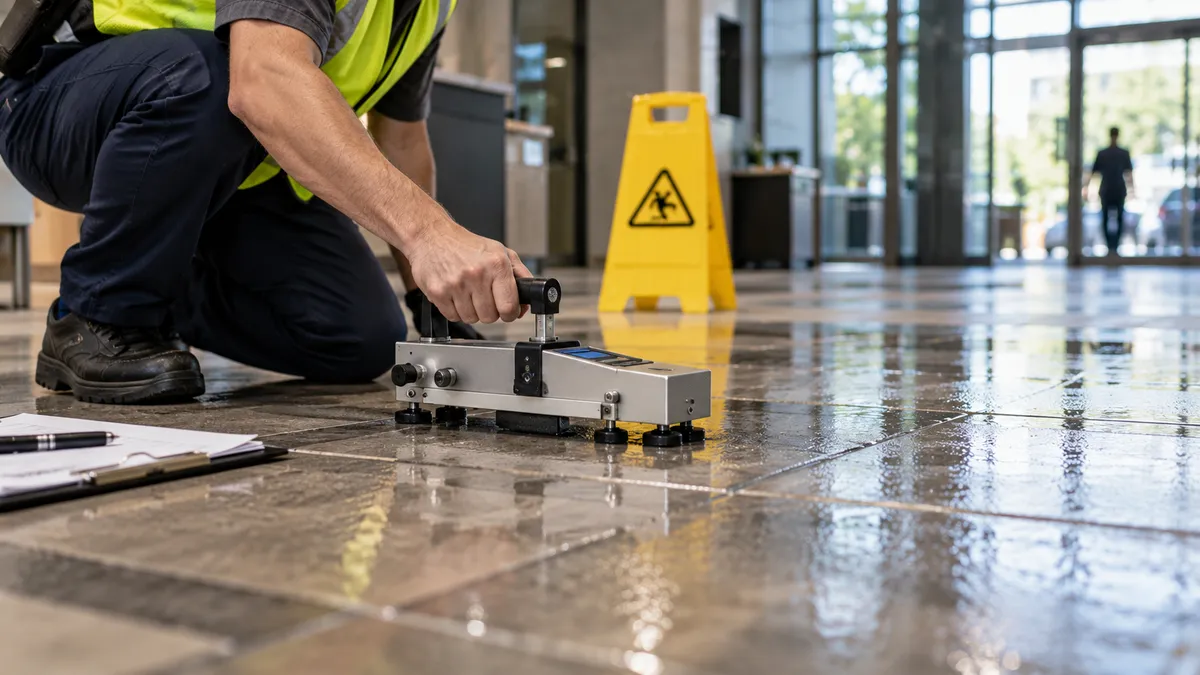
Ensuring walkway safety across a commercial or industrial facility can feel challenging, especially when visual checks alone do not reveal hidden hazards. Evaluating high-risk walking areas requires measuring wet Dynamic Coefficient of Friction (DCOF) against ANSI/NFSI B101.3 standards to objectively quantify slip hazards before incidents occur. Moving beyond visual inspections—which only confirm a floor is free of visible clutter or spills—wet DCOF testing establishes standardized traction benchmarks (such as the 0.42 threshold) across high-traffic zones, allowing facility managers to document safety compliance and verify proper surface friction proactively.
In this guide, we will explore why visual floor checks can be misleading and examine the primary high-risk walking zones across your property. You will learn about common evaluation pitfalls, how to implement an objective walkway testing framework, and how to maintain audit-ready records that demonstrate pre-incident due diligence.
What Are the 4 Primary High-Risk Walking Zones in Facilities?
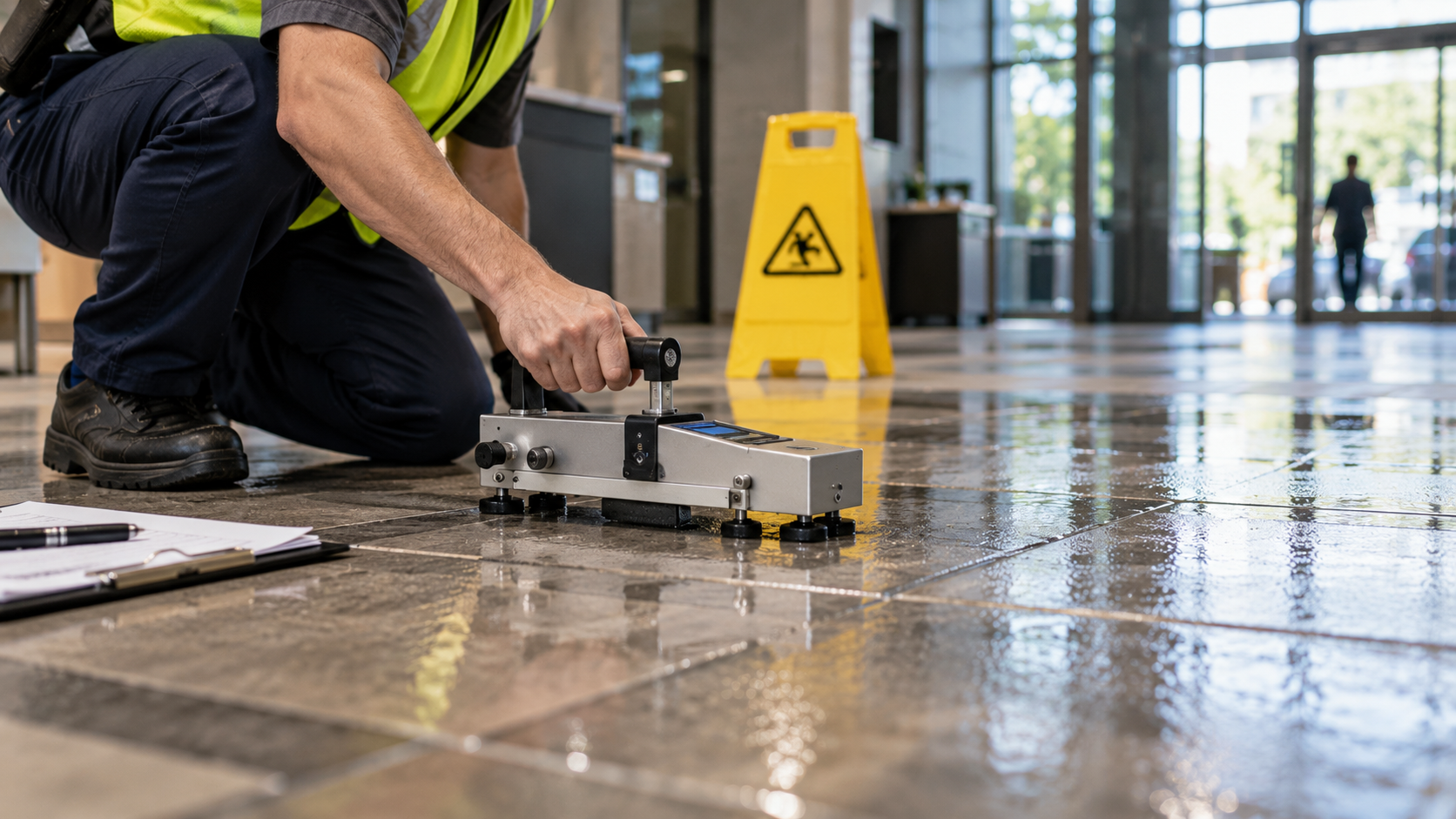
Slip incidents rarely happen at random. They consistently cluster in specific transitional zones where moisture, high foot traffic, and changing floor materials intersect. Identifying these environmental friction points allows you to focus testing efforts where exposure is highest. The 4 primary high-risk walking zones are…
1. Entrances, Foyer Transitions, and Matting Boundaries
Building entrances represent your primary line of defense against exterior weather, making them the highest-volume moisture zones in any facility. As visitors walk in from rain or ice, moisture transfers directly from shoes onto smooth interior tile or polished stone. Risk multiplies when entrance mats are too short to absorb water, saturated from heavy traffic, or placed without proper backing, causing the mat itself to shift or curl at the edges.
2. Kitchens, Restrooms, and Wet Processing Areas
Restrooms, commercial kitchens, and breakrooms face constant exposure to water, soap, grease, and cleaning chemicals. In these environments, liquid contaminants create a slick barrier between shoe soles and the floor surface. Grease buildup in food service areas is particularly dangerous because standard tile cleaning often spreads emulsified fat across the floor rather than removing it, causing dynamic friction levels to drop significantly.
3. Main Concourses, Polished Stone, and Tile Corridors
High-traffic hallways and main concourses present a unique challenge because wear patterns develop over time, subtly altering surface texture. Polished marble, granite, and glazed ceramic tiles look stunning and clean, but their smooth finish offers very little natural traction when wet. Because these corridors carry the highest volume of pedestrian movement, even a minor spill or tracked-in puddle creates immediate exposure for a large number of people.
4. Ramps, Stairs, and Elevation Transitions
Walking surfaces on an incline or decline demand significantly higher friction than flat ground to maintain footing. When a pedestrian steps onto a ramp or stair tread, gravitational force changes how their shoe interacts with the surface, increasing the likelihood of a heel slip. Even a slight reduction in dynamic coefficient of friction on a ramp or staircase can turn a minor foot slip into a severe, high-impact fall.
Common Evaluation Mistakes That Leave Facilities Exposed
Superficial visual inspections create a false sense of security. When management assumes visually clean surfaces are safe, high-risk walking areas remain unchecked. Avoiding these four common evaluation mistakes is essential for maintaining a defensible walkway safety program.
Mistake 1: Relying on Visual Inspection ("It Looks Dry and Clean")
The most widespread mistake in walkway safety is equating visual cleanliness with adequate slip resistance. Smooth tile, polished marble, and finished concrete can appear completely spotless while harboring dangerously low wet friction. Dynamic Coefficient of Friction (DCOF) cannot be measured with the naked eye, and assuming a clean surface is safe leaves facilities vulnerable to unexpected slip incidents.
Mistake 2: Assuming Standard Cleaning Removes Risk
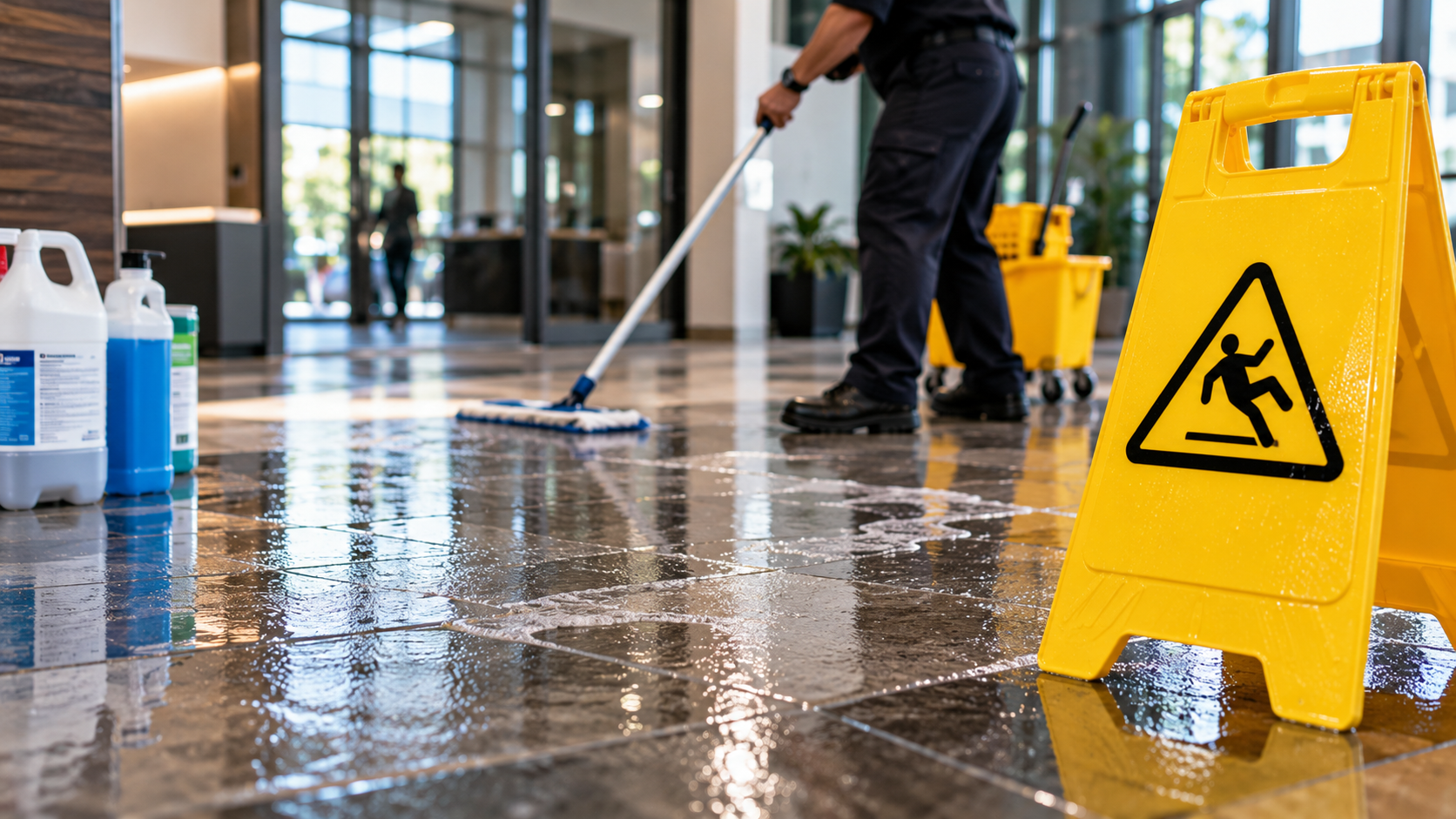
Janitorial teams often rely on heavy detergents or multi-surface cleaners to make floors shine, but improper chemical dilution frequently leaves behind a slick surfactant film. When water or humidity contacts this residual chemical layer, it transforms the floor into a hazard. Standard cleaning without proper rinsing or traction verification often actively reduces surface friction rather than improving it.
Mistake 3: Defaulting to Product Purchases Without Data
When a slip occurs, many facilities react by immediately purchasing anti-slip tapes, temporary mats, or harsh topical coatings. Buying products without first measuring the floor’s baseline traction against specific ANSI/NFSI safety thresholds—such as the minimum 0.42 wet DCOF benchmark—often introduces new maintenance headaches or damages the floor’s finish without fixing the underlying issue. Effective remediation begins with objective measurement to determine if any physical alteration is actually required.
Mistake 4: Failing to Maintain Written Evaluation Records
Evaluating a walking area verbally or informally offers zero protection during an insurance audit or personal injury claim. Without written, standards-aligned documentation showing that traction levels were tested and verified prior to an incident, a facility cannot demonstrate due diligence. Defensible risk management requires recorded measurements that prove walking surfaces were properly evaluated.
How to Implement a Standards-Based Walkway Evaluation Framework
Establishing a safer facility doesn't require guessing or jumping straight to aggressive surface alterations. Following an objective, step-by-step evaluation process helps you identify actual friction levels and isolate the root causes of slip hazards. This systematic framework allows you to evaluate high-risk walking areas accurately and choose the least invasive solution required to protect your property.
Step 1: Map Environmental Variables and Traffic Patterns
Before pulling out testing equipment, conduct an operational review of how the space is used throughout the day. Document where exterior water tracks inside during storms, note janitorial cleaning schedules, and track foot-traffic flow during peak hours. Identifying where environmental moisture and heavy foot traffic overlap reveals where friction testing will yield the most critical baseline data.
Step 2: Measure Dynamic Coefficient of Friction (DCOF)
Once high-risk zones are mapped, measure surface performance using standardized tribometry aligned with ANSI/NFSI B101 guidelines. DCOF testing evaluates the traction between a wet floor and a standard rubber sensor to establish an objective numerical baseline. If the measured friction meets recognized safety thresholds, the floor is verified as safe, and no physical treatment is needed.
Step 3: Audit Janitorial Chemistry and Maintenance Routines
If testing reveals low wet traction, investigate your daily cleaning protocols before assuming the floor material itself has failed. Audit the cleaning products used, verify chemical dilution ratios, and review the mop or auto-scrubber maintenance schedules. Correcting improper cleaning chemistry or eliminating detergent buildup often restores the floor’s natural traction without requiring surface modifications.
Step 4: Execute the Least-Invasive Remediation Strategy
When testing confirms that cleaning corrections alone cannot bring DCOF up to standard, apply the least invasive fix possible. Prioritize invisible, non-coating chemical treatments that increase microscopic surface traction without altering floor appearance or creating future peeling risks. Reserve anti-slip topical coatings as a last-resort option only when non-coating modifications cannot achieve compliant friction levels.
How to Build Audit-Ready Documentation for Liability Protection
Evaluating walking surfaces is only half the battle when managing facility risk. Without verifiable records, a thorough traction test offers zero legal protection if an injury claim or compliance review occurs months down the road. Establishing written, actionable, and audit-ready documentation ensures your risk management efforts are legally defensible and fully recognized by insurers.
What Documentation to Include and How to Record It
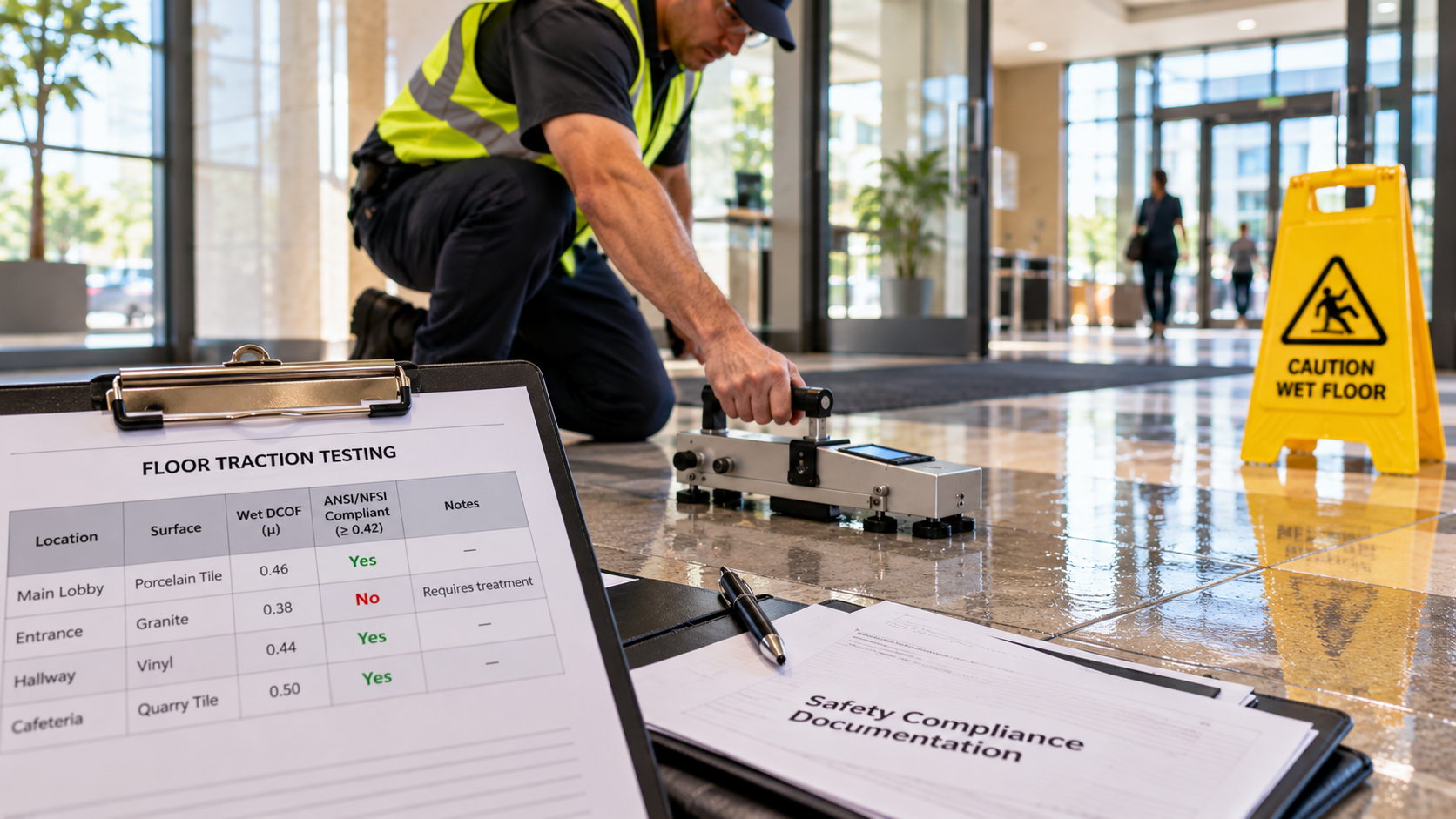
To build an audit-ready file, facility logs must capture specific data points during every evaluation. Every entry should document the exact date and time, specific test locations (such as "North Entrance Tile" or "Main Kitchen Line"), environmental conditions, and the specific tribometer model used along with its calibration status. Record the measured wet DCOF values against the ANSI/NFSI B101.3 standard, explicitly noting whether each location passed or required intervention.
Maintaining Actionable Remediation Logs and Testing Intervals
In addition to initial test scores, log any corrective steps taken—such as janitorial chemical adjustments, deep cleaning cycles, or invisible traction treatments—followed by post-treatment re-testing values to confirm compliance. Floor friction changes over time as foot traffic wears down surface micro-textures and janitorial residues accumulate. Setting up a quarterly or semi-annual re-testing schedule creates a consistent, time-stamped paper trail showing continuous due diligence.
If you feel uncertain about where to begin with testing and documentation, you don't have to navigate the process alone. At Slip Stoppers, we provide comprehensive, on-site walkway evaluations using specialized DCOF measurement equipment to test surface traction and compare results directly against ANSI/NFSI safety standards. To ensure your facility remains safe and fully compliant, schedule a walkway evaluation with our team today.
Frequently Asked Questions About Evaluating High-Risk Facility Walking Areas
How do you measure walkway slip resistance objectively?
Walkway slip resistance can be evaluated by testing the surface's Dynamic Coefficient of Friction (DCOF) using standardized tribometers. The testing process follows established guidelines, such as ANSI/NFSI B101.3, to evaluate wet friction under controlled conditions. This testing generates precise numerical data that shows whether a walking surface meets recognized safety thresholds, eliminating the need to rely on visual guesswork.
Why do clean floors still present slip hazards when wet?
Clean floors often lack sufficient traction when wet because smooth materials like polished stone or glazed tile lose surface friction when water creates a barrier between the floor and shoe soles. Additionally, routine cleaning chemicals can leave behind invisible surfactant residues or soap films. When water contacts these residual films, it significantly lowers the surface friction, turning an apparently spotless walkway into a slippery surface.
What is the difference between static and dynamic floor friction testing?
Static Coefficient of Friction (SCOF) measures the force required to start a shoe sole sliding from a complete stop on a dry surface. Dynamic Coefficient of Friction (DCOF) measures the friction of a shoe sole actively sliding across a wet walking surface. DCOF provides a much more accurate evaluation of real-world slip risks because most slip-and-fall incidents occur when a person steps onto a wet surface while in motion.
How often should high-risk walking areas undergo traction testing?
High-risk walking areas should undergo baseline DCOF traction testing at least semi-annually or quarterly, depending on daily foot-traffic volume and environmental exposure. Entrance foyers, commercial kitchens, and main concourses experience constant surface wear and chemical buildup that can degrade friction levels over time. Regular testing schedules help facility managers catch dropping traction levels before an incident occurs and maintain up-to-date compliance records.
Can cleaning procedures improve floor traction without modifying the surface material?
Proper cleaning procedures can significantly improve floor traction if low friction is caused by residual detergent buildup or grease accumulation. Auditing chemical dilution ratios, using proper floor rinsing protocols, and switching to emulsifying degreasers often restores a floor's natural friction. If DCOF measurements remain low after cleaning protocols are optimized, non-coating chemical surface treatments can increase microscopic traction without changing the floor's appearance.
What documentation is required to defend against a slip-and-fall claim?
Defending against a slip-and-fall claim requires written, time-stamped DCOF test reports that demonstrate proactive walkway evaluation prior to an incident. These records must detail the specific testing equipment used, the ANSI/NFSI standard applied, the exact locations tested, and the measured friction values. Maintaining written cleaning logs and routine audit documentation proves due diligence and demonstrates that the facility actively maintained safe walking conditions.
Bottom Line
Evaluating high-risk walking areas across a facility comes down to shifting from visual assumptions to verified surface performance. Standard visual checks leave unsafe conditions unmeasured, exposing your organization to preventable slip incidents, rising insurance costs, and unexpected legal claims. When risk management relies purely on appearance, friction hazards remain unchecked until an accident forces an investigation.
By establishing an objective, ANSI/NFSI-aligned DCOF baseline, you can identify true friction hazards before they lead to an injury. Measuring surface performance removes the guesswork, allowing you to isolate root causes like improper janitorial chemistry or environmental moisture tracking. This data-driven approach ensures you fix actual hazards while avoiding unnecessary alterations to compliant floors.
Securing written, audit-ready documentation provides the defensibility your facility needs during compliance reviews or insurance audits. Having documented traction testing results created prior to an incident demonstrates proactive due diligence to legal teams and insurance carriers. Establishing routine evaluation intervals ultimately protects your building visitors, your operational budget, and your professional reputation.
Eliminate Uncertainty Before an Incident Occurs
Waiting for a slip-and-fall incident to reveal an unsafe walking area is the most costly way to evaluate your facility. Visual checks and standard cleaning routines leave critical friction variables unmeasured, exposing your organization to unnecessary liability and rising insurance costs. Replacing assumptions with objective data allows you to fix true friction hazards while leaving compliant floors alone.
Taking a proactive approach protects building visitors, reduces liability exposure, and safeguards your operational budget. Replacing assumptions with verified DCOF measurement ensures floor performance meets recognized ANSI/NFSI safety standards.
To verify floor safety and establish compliant traction levels across your high-risk walkway zones, schedule a professional Walkway Evaluation with Slip Stoppers today.