
Non-Slip Tile Treatment Demonstration: How to Fix Slippery Floors Without Replacing Them
Most floors don’t look dangerous.
They look clean. Polished. Expensive.
Then someone steps on them with wet shoes.
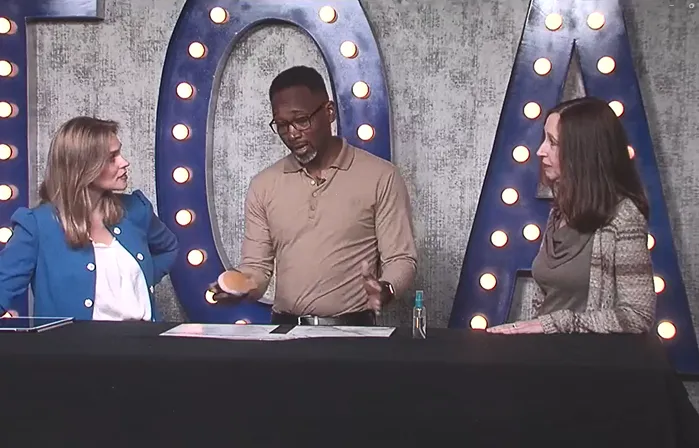
In a recent ABC segment, Michael and Renee from Slip Stoppers demonstrated how a non-slip tile treatment can dramatically improve traction when surfaces get wet without changing the appearance of the floor.
Why Slips and Falls Are a Bigger Problem Than People Think
Slips and falls are the number one cause of accidental injuries in hotels, restaurants, and public buildings.
That’s not a small statistic.
According to The Department of Labor and the National Safety council:
50 billion dollars are spent annually on healthcare related to slips and falls.
Slip and Fall accidents are the second leading cause of accidental death; automobile accidents are number one.
Slip and falls are the number one cause of accidental injuries in hotels, restaurants and public buildings.
More than 9 million slip and fall accidents occur in North America every year.
About 25,000 people a day are hospitalized as a result of these accidents.
On average, 55 people a day DIE as a result of slips and falls.
55% of adults over 40 years of age have experienced slip and fall accidents.
Almost 35% of slip and fall accidents involve children.
And the damage isn’t limited to the fall itself.
It often leads to:
Emergency response
Workers’ compensation claims
Lawsuits
Increased insurance premiums
Reputation damage
The most frustrating part?
Most of these floors look perfectly safe before water hits them.
The ABC Demonstration: Same Tile, Two Completely Different Results
During the segment, they used one single tile.
Half of it was treated. Half of it was not.
Visually, there was no difference.
You couldn’t see it. You couldn’t feel it by touching it.
Then water was poured across both sides.
The untreated half became extremely slippery. The treated half immediately resisted sliding.
That side-by-side comparison is powerful. You didn't see the actual risk until the tile was wet. The improvement wasn’t visible either. But the performance difference was undeniable.
What Is SureStep Non-Slip Treatment?
SureStep is one of the treatments that we offer as a non-slip surface treatment designed for hard surfaces that become slick when wet.
It can be applied to:
Tile floors
Showers
Bathtubs
Pool decks
Entryways
It doesn't add a gritty coating. It doesn't change the color or finish.
It improves how the surface performs when moisture is present.
How Can a Floor Become Safer Without Looking Different?
This is where most people get skeptical. If nothing looks different, what changed?
During the interview, Michael explained that tile contains both hard and soft agents. The treatment recesses the softer elements and leaves the harder components exposed.
The result is increased traction when the surface becomes wet.
No gloss change. No visible texture shift. No design compromise.
You keep your flooring, but with less risk.
How Long Does the Treatment Take?
The treatment typically takes 30 minutes to about an hour, depending on the surface area and material. Once the process is complete, the floor is immediately safe to use.
For businesses, that means:
No multi-day shutdown
No major disruption
Treatment during off-hours if needed
Safety improvement without operational interruption.
Do You Need Special Cleaning Products Afterward?
No special cleaners are required. Standard cleaning products can still be used.
The only general recommendation is to avoid highly abrasive scrubbing products.
During the segment, Renee shared that their enamel bathtub was actually cleaned more thoroughly during the treatment process. Stains that resisted bleach and other cleaners were removed.
Improved traction and improved cleanliness at the same time.
Where Non-Slip Treatment Makes the Most Sense
This type of treatment is especially valuable anywhere water is routine:
Residential showers and tubs
Hotel bathrooms
Assisted living facilities
Restaurant kitchens
Pool decks
Public restrooms
Rain-exposed entryways
If moisture or anything else that can make a floor slippery is there, safety should be first priority.
FAQ: Common Questions About Non-Slip Tile Treatment
Does non-slip treatment change how my tile looks?
No. As shown in the ABC demonstration, the treated tile looked identical to the untreated tile. The difference only became clear when water was added and traction was tested.
Will the treatment make my floor feel rough?
Not in a way that changes normal use. The treatment works at a microscopic level to improve wet traction without adding a visible or gritty surface layer.
How long does non-slip treatment last?
Longevity depends on surface type, traffic levels, and cleaning practices. In most cases, the treatment is designed to be durable under normal residential or commercial use.
Can this be done in a business without shutting down?
Yes. The segment explained that treatment typically takes 30 to 60 minutes and the floor is safe immediately after completion. Many businesses schedule it during downtime and reopen the next day as normal.
Is this only for homes?
No. While the demonstration referenced residential bathrooms, the treatment can also be applied in commercial environments such as restaurants, hotels, healthcare facilities, and pool areas.
What can you do?
The most important part of the ABC segment wasn’t the product. It was the proof.
Two halves of the same tile. One safe when wet. One not.
Most slip hazards aren’t obvious until someone falls. If a surface becomes slippery when wet, that’s not just an inconvenience. It’s a preventable risk.
The demonstration showed that you don’t always need to replace your floors to fix the problem. Sometimes you just need to change how they perform under real-world conditions.
That’s the difference between hoping a floor is safe and knowing it behaves safely when it matters.